Everything You Need to Know About Eco-Friendly Box Production: From Sustainable Materials to Manufacturing Methods
Have you heard the term “eco-friendly”? It’s a familiar word, but especially these days, when people are more conscious of the environment, eco-friendly has become a major trend attracting a lot of attention and popularity. In fact, many brands are racing to launch eco-friendly packages designed with the environment in mind. If you’re preparing to produce packaging, consider making an eco-friendly box using sustainable materials...
Have you heard the term “eco-friendly”? It’s a familiar word, but especially these days, when people are more conscious of the environment, eco-friendly has become a major trend attracting a lot of attention and popularity. In fact, many brands are racing to launch eco-friendly packages designed with the environment in mind.
If you’re preparing to produce packaging, how about making an eco-friendly box using sustainable materials? In today’s post, let’s take a closer look at the eco-friendly materials and packaging production methods used to create eco-friendly boxes!
 Designed by Yan Zaretsky
If you’d like to learn more about eco-friendly packaging before diving into eco-friendly design, check out: What Is Eco-Friendly Packaging?
The most basic step in eco-friendly box production is choosing materials made from sustainable sources. Above all, the most important and essential elements are eco-friendly paper and eco-friendly ink.
Eco-Friendly Paper for Eco-Friendly Box Production
Have you heard of eco-friendly paper? In fact, eco-friendly paper is already widely used in everyday life. A representative example is recycled paper, which contains more than 40% reprocessed and reused paper; kraft paper is a common type of recycled paper. There is also non-wood paper, made by blending materials other than wood, such as sugarcane, bamboo, and seaweed. Another option is FSC-certified paper, which is certified by the Forest Stewardship Council (FSC) from harvesting through processing and distribution.
If you want to know everything about eco-friendly paper and materials, check out Everything About Eco-Friendly Paper and Materials
Soy Ink for Eco-Friendly Box Production
As the name suggests, this ink is made with soybean oil as its base. Soy ink is already widely used in eco-friendly printing. It refers to ink that replaces petroleum-based solvents with soybean oil. Using soy ink helps reduce air pollution, and because it contains a high proportion of plant-based oils, it is highly biodegradable.
 Source: Primera Facebook
At present, all folding cartons for the domestic brand Primera feature the mark shown above, indicating that soy ink was used in production. If you care about the environment, why not look into eco-friendly boxes printed with soy ink?
Need folding carton production? Packative
Rice Bran Ink for Eco-Friendly Box Production
Have you ever seen rice bran, the byproduct left after rice grains are milled?
 Source: Photo by Utsman Media on Unsplash
Ink extracted from discarded rice bran is also being actively researched as a sustainable material. It is considered one of the most promising eco-friendly inks thanks to its excellent print quality, fast drying speed, and strong abrasion resistance. If this ink becomes more widely commercialized, it could help make use of waste rice bran and benefit farmers as well. Since no harmful substances such as endocrine disruptors or heavy metals have been found in it, it could be a win-win ink for both the printing workplace and the environment!
How About Water-Based Ink for Eco-Friendly Box Production?
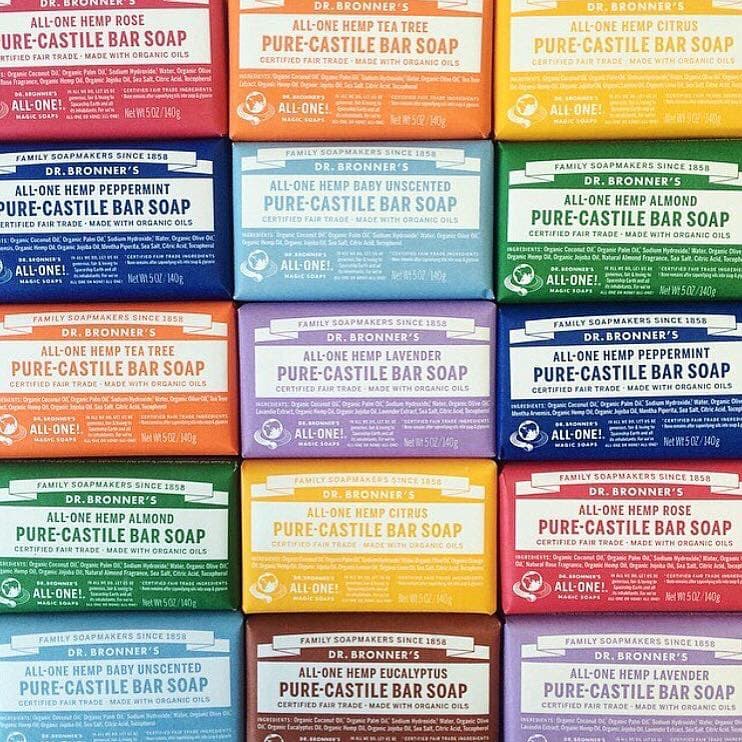 Source: Dr. Bronner's Facebook
Water-based ink is exactly what it sounds like: water-soluble ink. Because of that, it has no distinctive odor and is harmless to the human body. In other words, it is safe for items that food or children frequently touch and use, such as toys. In practice, water-based ink is used for cosmetics, children’s toys, food, and more, and packaging printed with water-based ink has the added advantage of being easy to recycle.
A representative eco-friendly packaging design made with water-based ink is Dr. Bronner’s solid soap, known as “Pure Castile Soap.” Its colorful packaging is printed on 100% recycled paper with water-based ink, making it a truly eco-friendly packaging design.
Need packaging design tips? Refer to 2021 Packaging Design Trends.
Printing for Eco-Friendly Box Production: Embossing
(Embossing/Debossing)
If you care about the environment, why not apply embossing and debossing to your own packaging design instead of using ink?
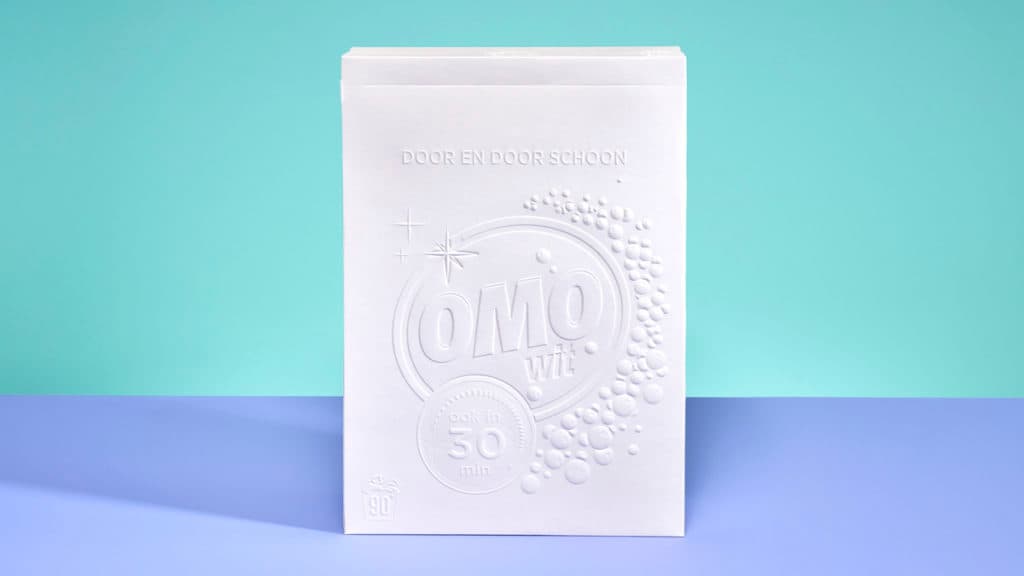 Source: Design: Packadore Collective on packagingoftheworld, packaging design using embossing
Embossing is a method of creating text or images by pressing from below with thick paper. Depending on the package, it can create a luxurious feel, which makes it one of the popular post-processing methods—but it can also replace printing!
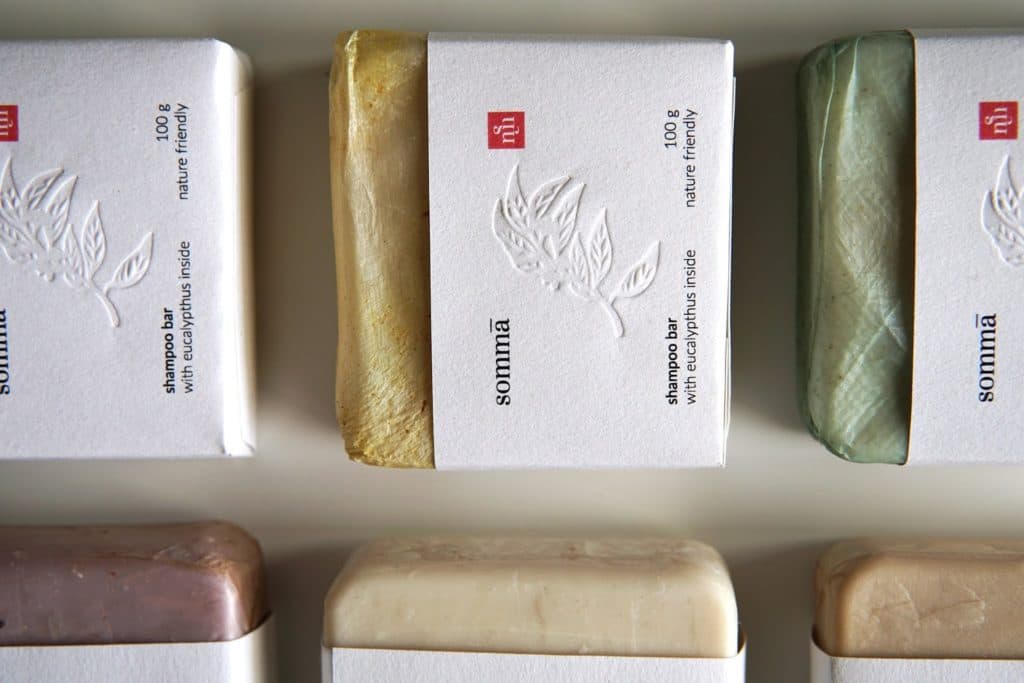 Source: Design: Ula Krasny on packagingoftheworld, packaging design using debossing
Debossing is the opposite of embossing, allowing text or images to be pressed in from above. Along with embossing and debossing, foil stamping or ink-based printing is also possible, but for eco-friendly box production, the best option is to leave out both foil and ink.
If you’re curious about packaging design post-processing, check out: 11 Terms You Should Know Before Making Packaging
Printing for Eco-Friendly Box Production: Black Foil Stamping
![Post-print finishing] Black foil stamping in elegant glossy/matte black](https://static.wixstatic.com/media/30bf5b_2f9359108bfe494aabf58618e3fe3eb3~mv2.jpg/v1/fill/w_1000,h_560,al_c,q_90/30bf5b_2f9359108bfe494aabf58618e3fe3eb3~mv2.jpg) Source Design: Jungmoon; einstom.wixsite.com
As the name suggests, black foil stamping is a printing method that applies foil in a black tone. Color printing and foil stamping are different from the very start. Color printing generally uses digital or rotary machines, while foil stamping is a post-processing technique applied at the final stage after printing, processed by compression with a Thomson die.
For eco-friendly box production, kraft paper or corrugated board materials are often used. When standard color printing is used, the paper’s grain and color show through, resulting in color differences. In contrast, foil stamping is processed through compression as a finishing technique, so the material’s distinctive grain and color show through much less than with ordinary color printing, allowing for clearer and deeper colors.
Printing for Eco-Friendly Box Production: UV Printing
UV printing, which uses light emitted from ultraviolet lamps to dry ink quickly, not only shortens printing time but also makes it possible to print on a wide range of materials. If 100% solvent-free UV ink is used, it becomes an eco-friendly printing method for box production that is free from VOCs, or volatile organic compounds, and does not cause environmental pollution.
Eco-Friendly Box Production: Please Skip the Coating
Once you’ve decided on eco-friendly paper and eco-friendly ink, it’s time to consider eco-friendly coating. There are three main reasons for coating boxes.
First, it improves durability. In other words, it acts like a protective layer that shields the box from scratches, wear, and water.
Second, it allows you to produce results quickly with a lower defect rate in other post-processing steps.
Lastly, the gloss created by coating helps achieve the desired color expression.
However, because coated paper is difficult to recycle and ultimately puts a burden on the environment, the best choice for the environment is to skip coating so recycling is easier.
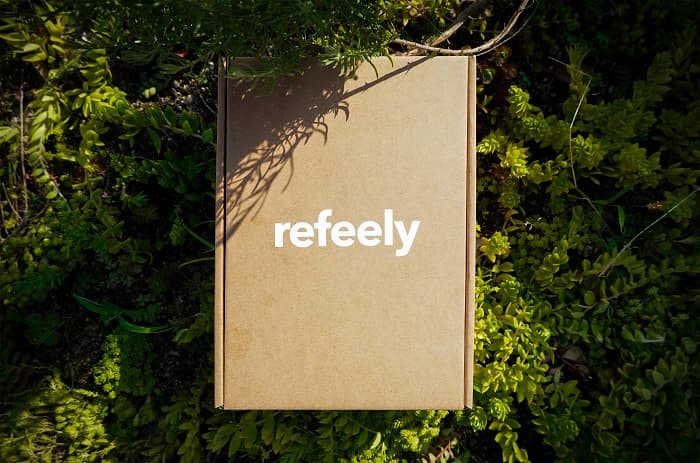
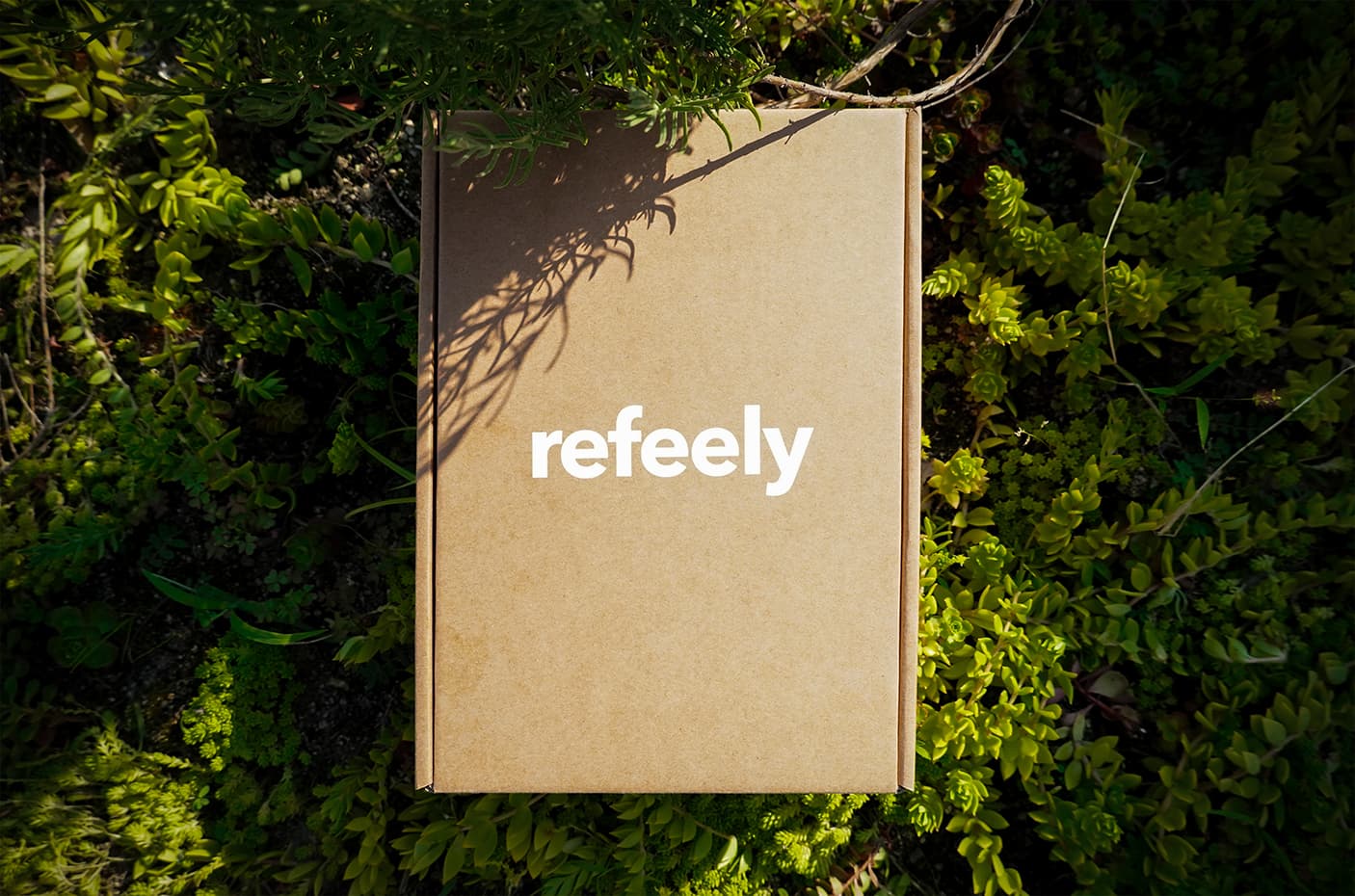
This is Refeely’s eco-friendly packaging, produced with Packative. It was made without coating so that it would be easier to recycle, in line with environmental considerations. Even with corrugated board alone, the result is a stylish eco-friendly box that effectively conveys the brand image.
If you need eco-friendly box packaging design, request a quote now from Packative