G-Type Packaging Box vs. Shipping Box: How Are These Two Boxes Different When Their Names Sound So Similar?
Do you know the difference between a “packaging box” and a “shipping box”? Since neither term is especially difficult to understand, it’s easy to overlook the distinction—but if you’re packaging and selling products, it’s essential to clearly know the difference between packaging boxes and shipping boxes. It also helps to understand which packaging box to use, how to use it, and what kind of shipping box you need...
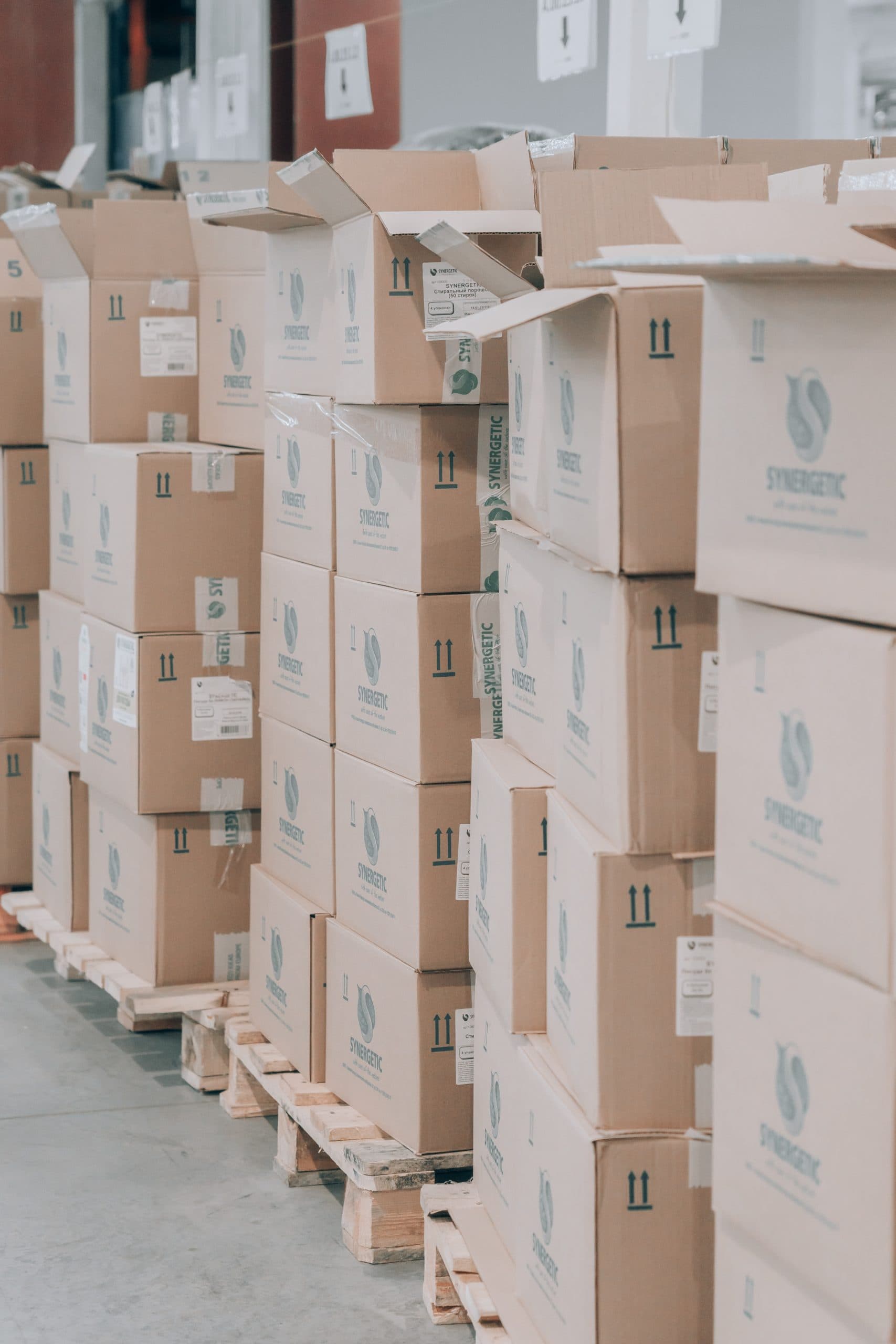
Do you know the difference between a “packaging box” and a “shipping box”? Since neither term is especially difficult to understand, it’s easy to overlook the distinction—but if you’re packaging and selling products, it’s essential to clearly know the difference between packaging boxes and shipping boxes. It also helps to understand which packaging box to use, how to use it, and what kind of shipping box you need. Let’s take a step-by-step look at the differences between packaging boxes and shipping boxes, as well as how you can easily produce high-quality packaging boxes.
1. Take a closer look at packaging boxes
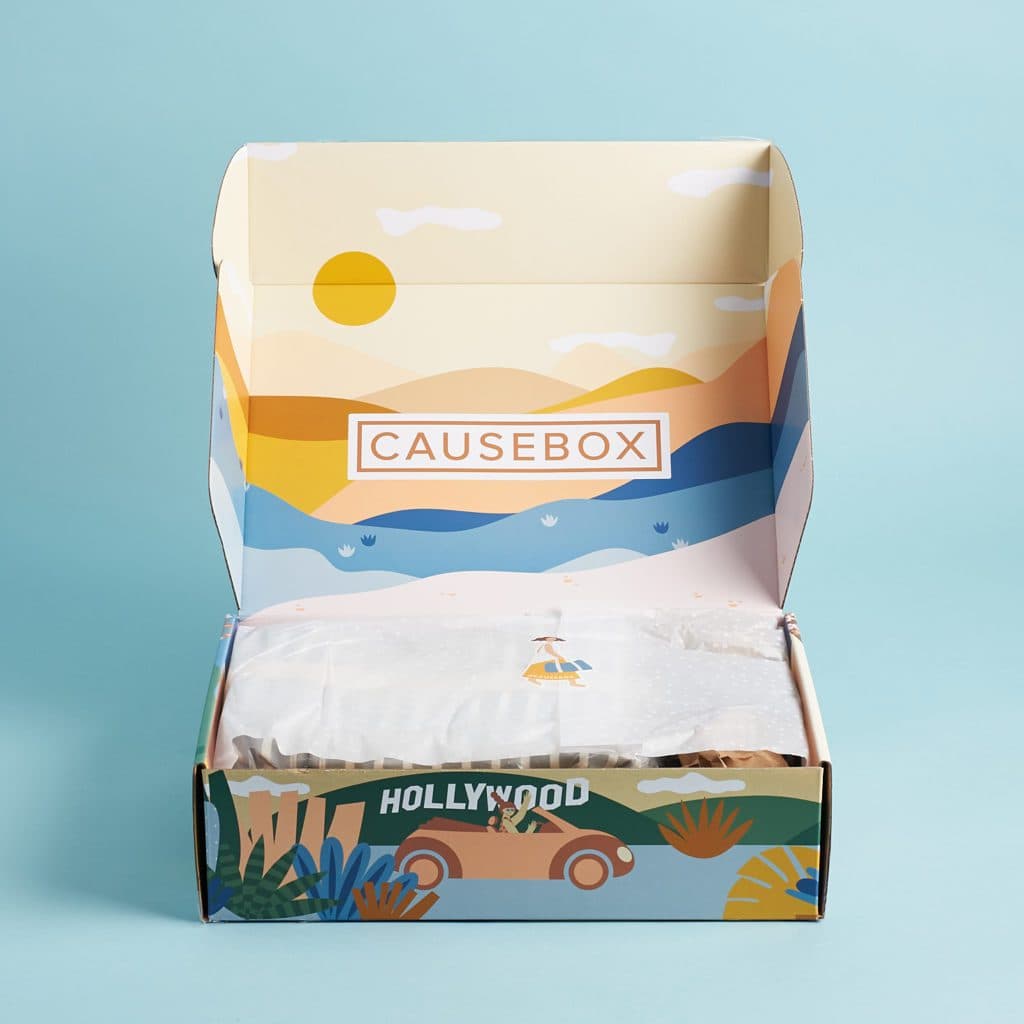
Packaging boxes are also called G-type boxes, and because of their sturdy structure, they are used to safely package products that are easy to damage. For a more detailed explanation, see here.
In general, all boxes used to “package” products are often referred to broadly as packaging boxes. In fact, however, packaging boxes refer to a specific type of dieline designed so that no separate adhesive assembly is needed. Because of their relatively sturdy structure, packaging boxes are often used for items that are at risk of damage, and they are especially useful when shipping such products. The basic material is corrugated board, but because these boxes are often expected to look attractive as part of the packaging, white paper is usually added to the outer surface to improve print quality. Since various design elements can be freely added, the price tends to vary depending on those options. The structure itself is strong and does not require adhesive, so it has the advantage of being eco-friendly. On the other hand, it also has the drawback of requiring a relatively large dieline area compared to the finished box size.
2. Take a closer look at shipping boxes
Shipping boxes literally mean boxes for parcel delivery. Although sizes and thicknesses vary by type, they are all designed for transporting, carrying, and protecting products, so durability is a defining feature overall.
1. What are shipping boxes used for?
 Source: living-wisdom.tistory.com
A shipping box is exactly that—a box for sending parcels. From a consumer’s point of view, it’s the brown container they first encounter at the front door when receiving an online order by delivery. From the moment a product leaves the warehouse until it reaches the customer’s home, it goes through a long and complicated journey. From truck to truck, from hand to hand, tilting and tumbling along the way—that’s the fate of a parcel. So the purpose of a shipping box is not only to hold the contents together, like any other box, but also to protect the internal products from external impact. And because its purpose is also transportation, the Korea Post Office has even introduced changes such as handle holes on both sides of large boxes.
2. What material are shipping boxes made of?
 Source: blog.naver.com/hanlee_02/221791162168
Shipping boxes are often called “corrugated boxes” because they are made of corrugated board. Corrugated board is paperboard made stronger by layering two sheets of thick, rigid board with a wavy fluted sheet between them. Depending on the thickness and width of the flutes, the flute type is generally divided into about four categories, and naturally this also affects the different types of corrugated boxes, meaning shipping boxes.
3. How much do shipping boxes cost?
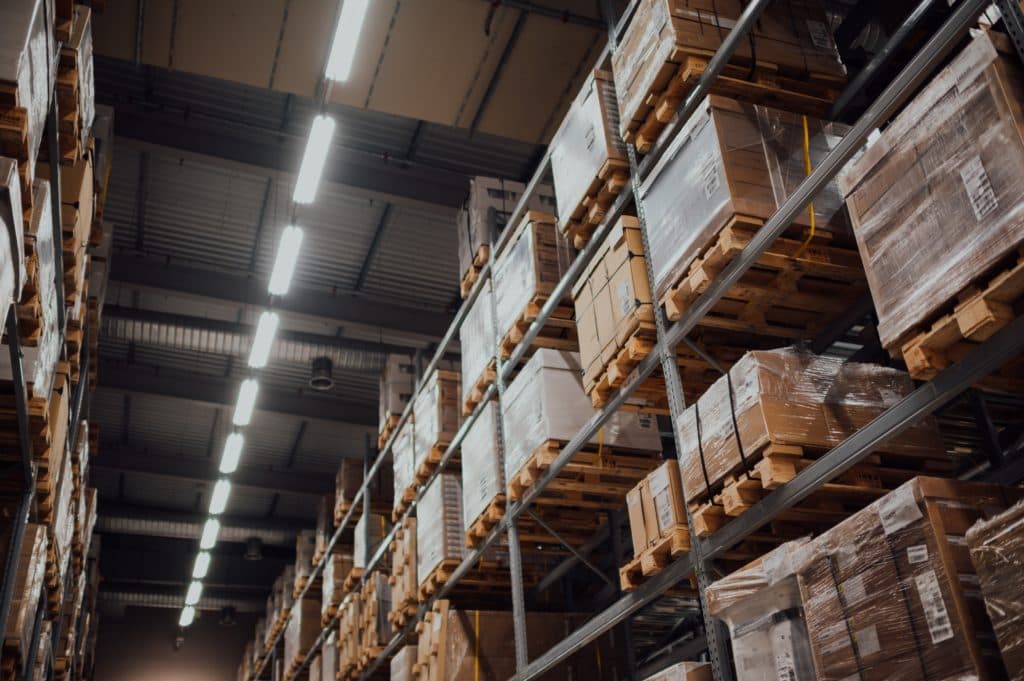
The most common place people look for shipping boxes is the post office. According to the recently increased prices (as of April 2022), the Post Office sells the smallest No. 1 box (220 x 190 x 90 mm) for KRW 700 and the largest No. 5 box (480 x 380 x 340 mm) for KRW 2,300. Buying in bulk online in units of 100 to 200 boxes can be cheaper, but it’s important to check the size and flute type carefully. Another good option is to visit wholesale markets in Dongdaemun or Sindang and inspect the boxes in person before purchasing.
How to buy boxes at Bangsan Market
4. What are the pros and cons of shipping boxes?
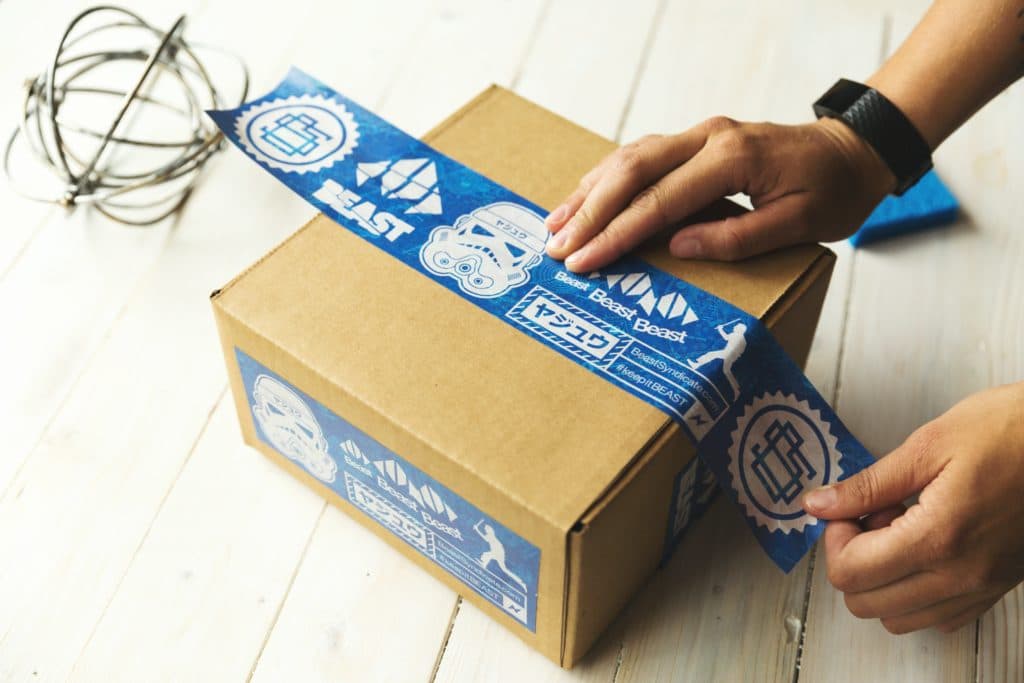
When you hear the word “box,” the first thing that comes to mind is usually the familiar brown corrugated box, which is why shipping boxes are among the most convenient boxes to use. No matter what kind of product you are shipping, it ultimately has to be packed into a shipping box, so their use is practically unavoidable. In short, the main advantage of shipping boxes is their high practicality. On the other hand, because they are mostly sold in large quantities with a fixed dark brown color and shape, they are not especially suited to custom design. If printing is needed, color options are limited as well (using colors other than black can be expensive). And since they are not foldable self-locking boxes, you also need tape or string to seal them.
3. What is the difference between packaging boxes and shipping boxes?
 Source: memomee.tistory.com/442
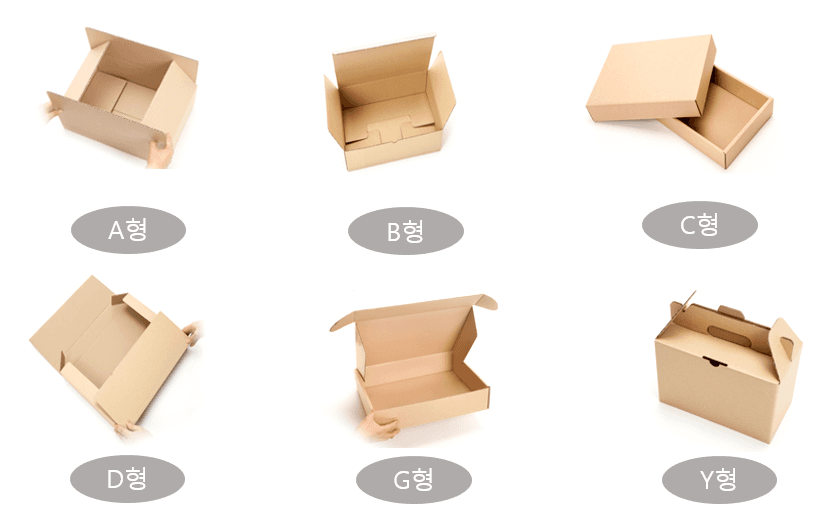
Now that we’ve looked at what packaging boxes and shipping boxes are, understanding the box structure itself is necessary before we can clearly explain the difference between them. Box types are broadly divided into six categories based on shape and purpose: A-type, B-type, C-type, D-type, G-type, and Y-type.
1. Shipping box is another name for an A-type box
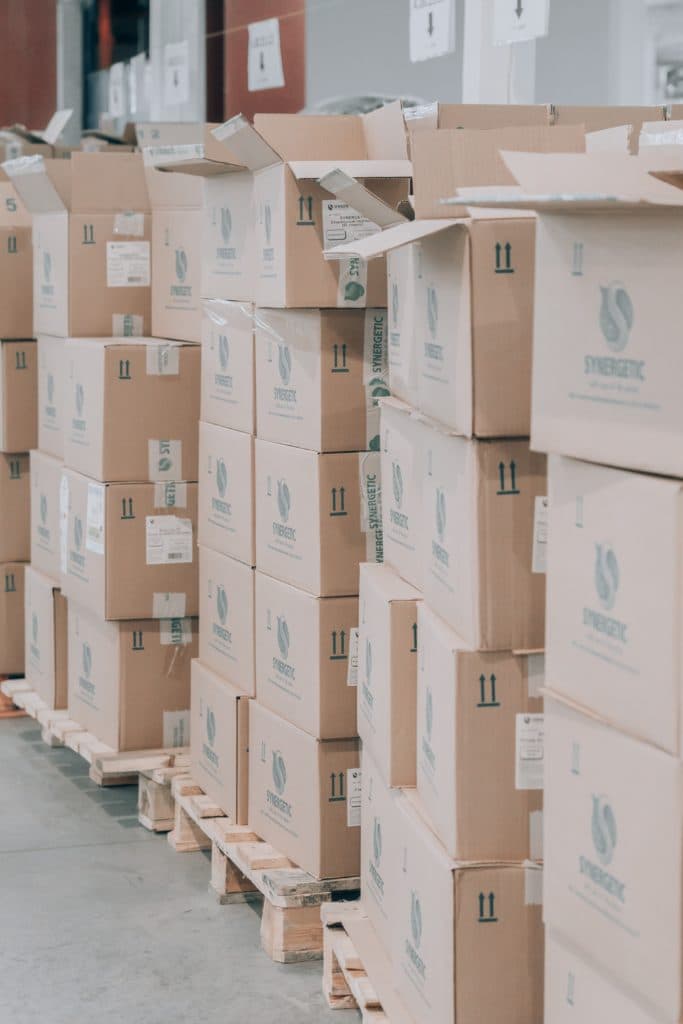
Among the six box types, the A-type box is the standard shipping box. Its dieline is the simplest of all types, so it is easy to assemble, but the box itself is difficult to seal without additional materials. Of course, it can also be used for packaging, but because of its structure, it is most commonly used for shipping, parcels, and moving items.
Shipping boxes themselves can also be divided into two major types: RSC boxes and die-cut boxes. The most basic and common form is the RSC box, which has four flaps that must be folded over and sealed with tape. It is the most economical type. A die-cut box, on the other hand, is cut in a “punch-out” method using a cutting machine called a die cutter or die press. In this case, the required size or structure can be appropriately reflected through cutting depending on the product, but it is more expensive than an RSC box.
2. Packaging box is another name for a G-type box
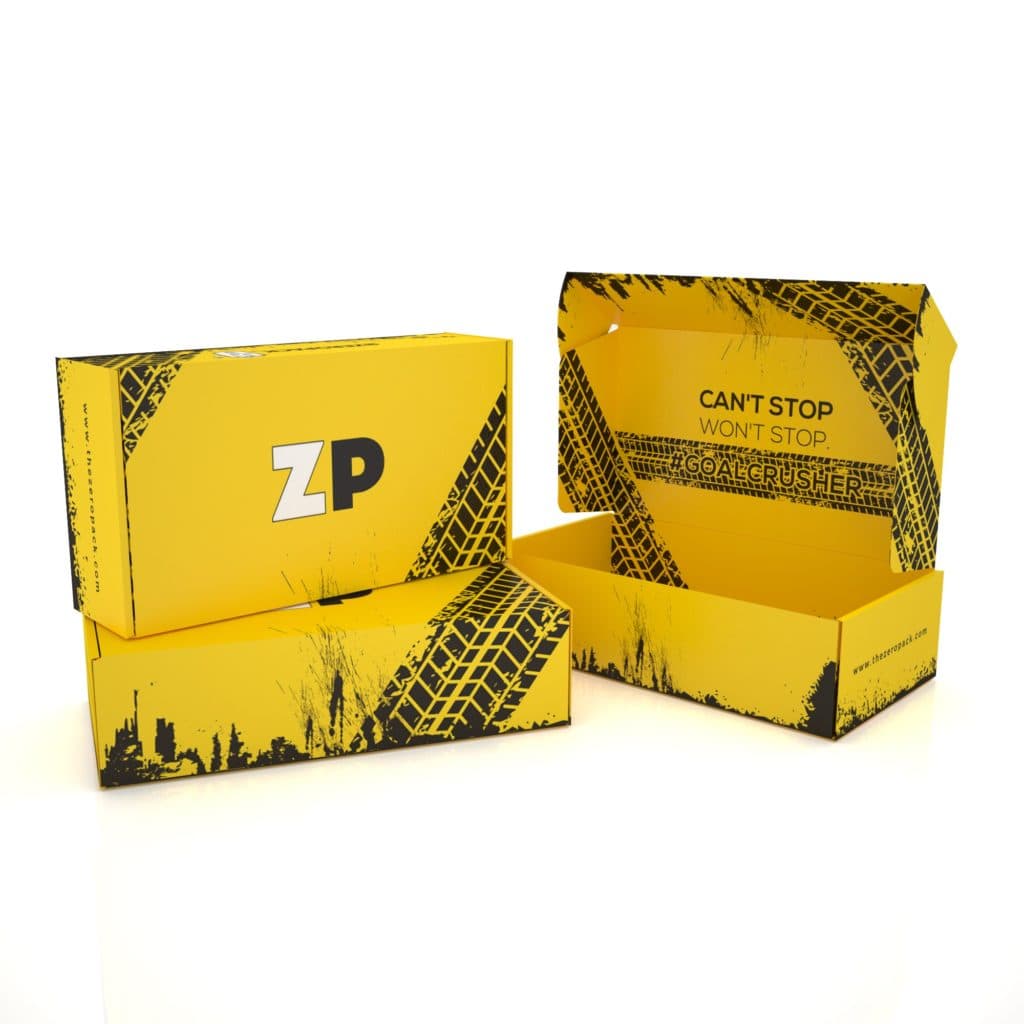 Source: 99designs.fr, by JianBranding™
A G-type box is what people generally mean by a packaging box. Unlike a shipping box, it can be assembled on its own and does not require tape or string for sealing. It is also generally thinner and smaller than an A-type shipping box. So depending on the product, the item is first packed in a G-type box, and then when it is shipped, it is placed again into an A-type box and sealed.
3. The material is the same, but shipping boxes usually do not include design elements
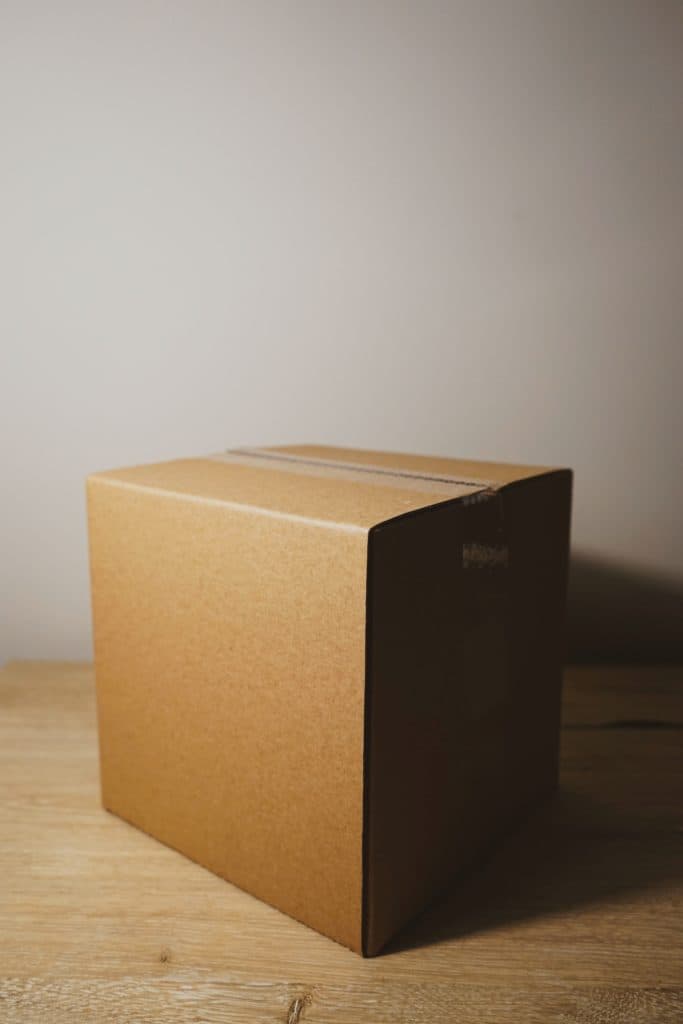
A-type and G-type boxes—that is, shipping boxes and packaging boxes—share the same basic material. Both are corrugated board boxes. However, shipping boxes are generally more likely to get scuffed on the outside during delivery, and since their main purpose is simply to protect the product during transit, they usually do not include design elements. Packaging boxes, on the other hand, are intended specifically to present the product attractively, so design suited to the product becomes an important factor.
4. Packative offers an easy way to produce beautiful, durable packaging boxes
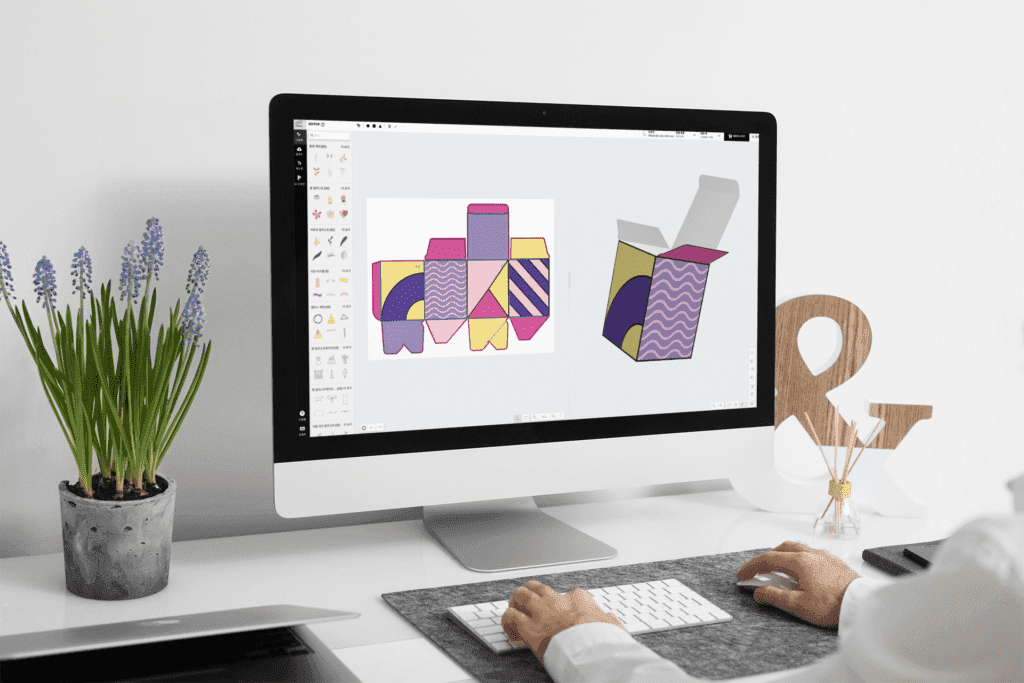
Depending on the product and purpose, packaging boxes are used as gift boxes, subscription boxes, and more. These packaging boxes play an important role as packages that can be designed and customized to match each theme, giving customers a special unboxing experience. Packaging is ultimately a process that assumes the package will be opened. It is very important that customers have a pleasant experience opening a beautifully designed package and encountering the product inside. If you are looking for a special and distinctive packaging box, try making a custom packaging box easily through Packative. If you need a packaging box that fits your product but are unsure because off-the-shelf options don’t match your design preferences and bulk ordering feels burdensome, Packative—an expert in custom packaging box production—will be your best choice.