How Should You Make Dessert Packaging Boxes? Paper Materials and Box Types
Recently, dessert hotspots such as Knotted Donuts, Old Ferry Donut, and Sao Bakery have been gaining popularity. As a result, more people seem to be taking an interest in a wider variety of desserts. Of course, more dessert specialty shops are also popping up. If you are planning a dessert business or already running one, packaging is an essential part of the process...
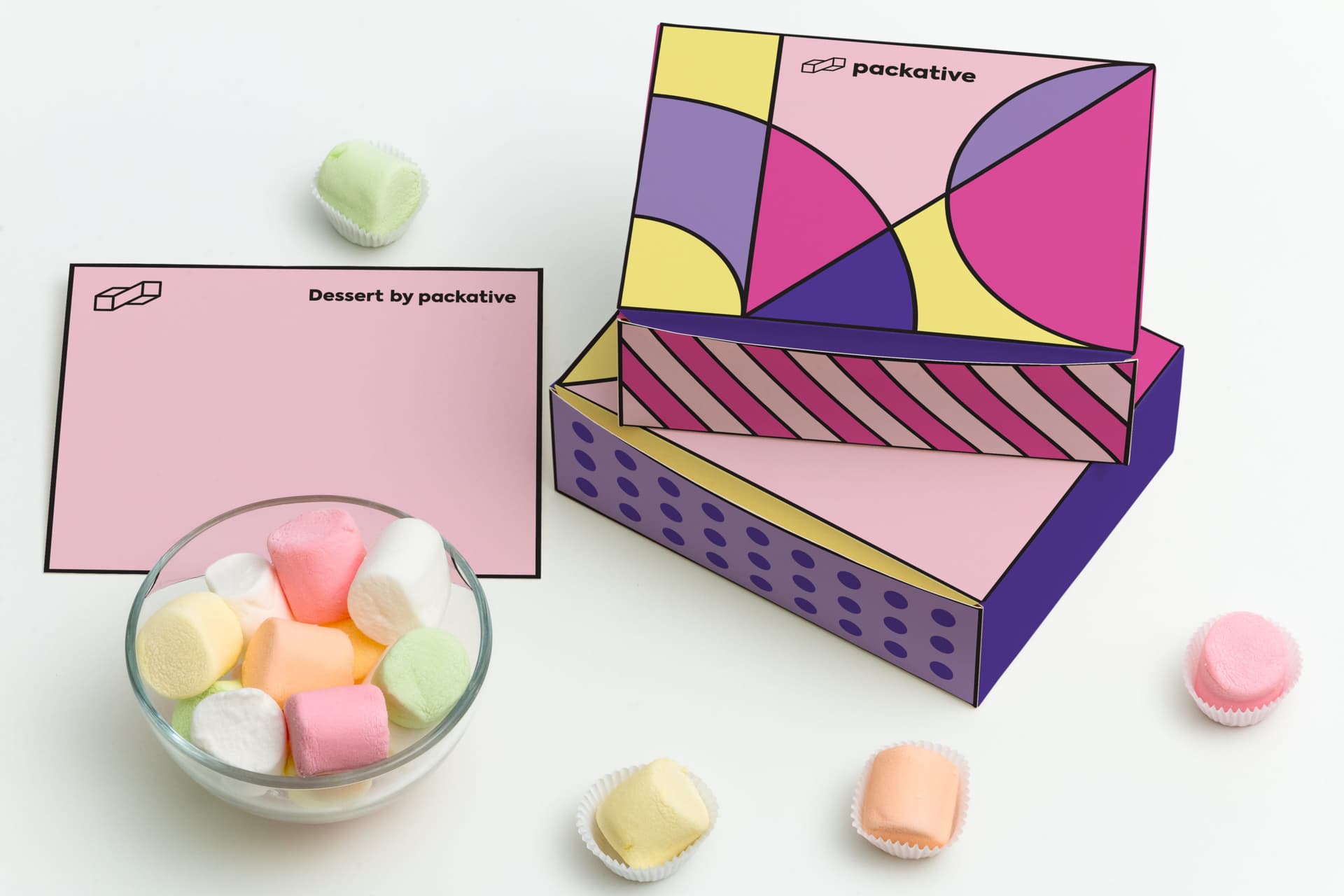
Recently, Knotted Donuts, Old Ferry Donut, and Sao Bakery have been gaining popularity as dessert hotspots. As a result, more people seem to be taking an interest in a wider variety of desserts. Of course, more dessert specialty shops are also popping up.
If you are planning a dessert business or already running one, packaging is something you can’t overlook. Taste matters, but so does a colorful design that catches people’s attention — that’s one of the factors that can drive popularity. For that reason, many people seem to put a lot of thought not only into the dessert itself, but also into the packaging.
When producing dessert packaging boxes, let’s take a look at what you should consider, what types of paper are available, and how the design should be approached.
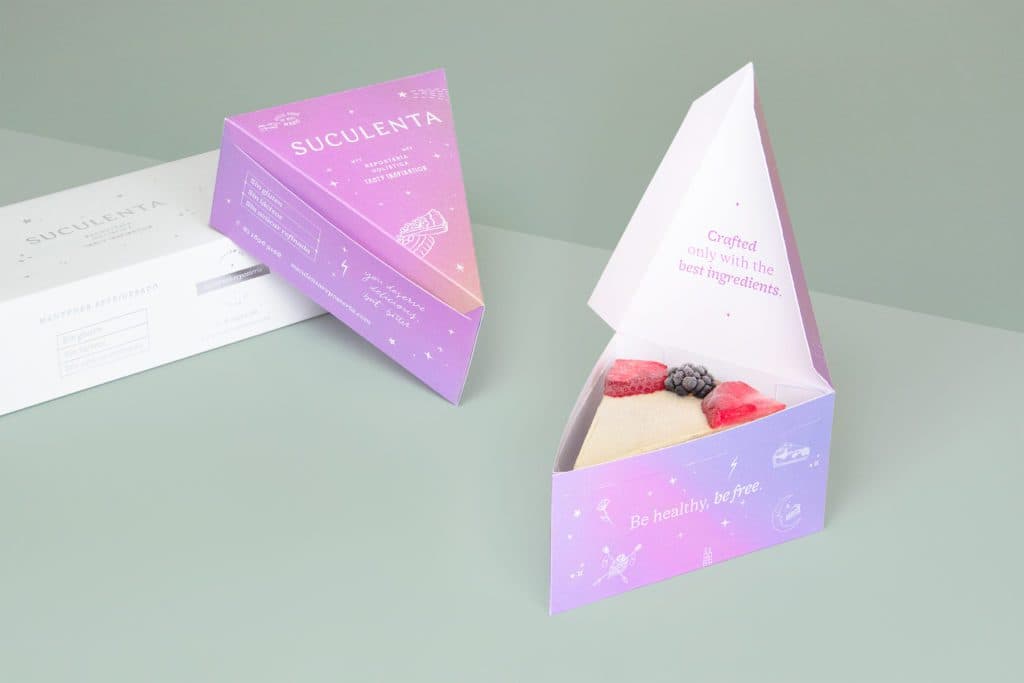 Source: Dieline
What material is best for dessert packaging?
Delicately designed desserts require careful packaging to preserve both their shape and taste. If they are transported in poor packaging and get knocked over, those beautiful desserts can be ruined. Dessert packaging can take many forms, but in broad terms, it can be divided into plastic containers or paper boxes.
So, let’s look at the pros and cons of plastic and paper packaging boxes. Take a close look and choose the packaging format that best suits your needs.
First, let’s look at plastic.
 Photo by pariwat pannium on Unsplash
Advantages
- Helps maintain the shape of the dessert
- It is relatively easy to create a fixed insert or tray for the product
- It can be refrigerated while still in the packaging container
Disadvantages
- Not eco-friendly
- Takes up a lot of space
Next, let’s look at paper packaging boxes.
 Photo by Madalyn Cox on Unsplash
Advantages
- Lightweight and easy to carry
- Eco-friendly and easy to recycle
- Relatively inexpensive
Disadvantages
- Less stable than plastic
- More vulnerable to moisture and grease
What do you think? Each option has its pros and cons, but paper dessert boxes are especially popular because they are eco-friendly and affordable. Thanks to advances in technology, stability and moisture resistance have also improved significantly. In this article, we’ll focus on paper dessert boxes.
Finding the right paper for dessert boxes
There are literally thousands of different paper and board options on the market. But the first thing to consider is whether the material is suitable for food use. Let’s briefly look at the paper types commonly used for box production.
Paper type not suitable 1: SC Manila (SC)
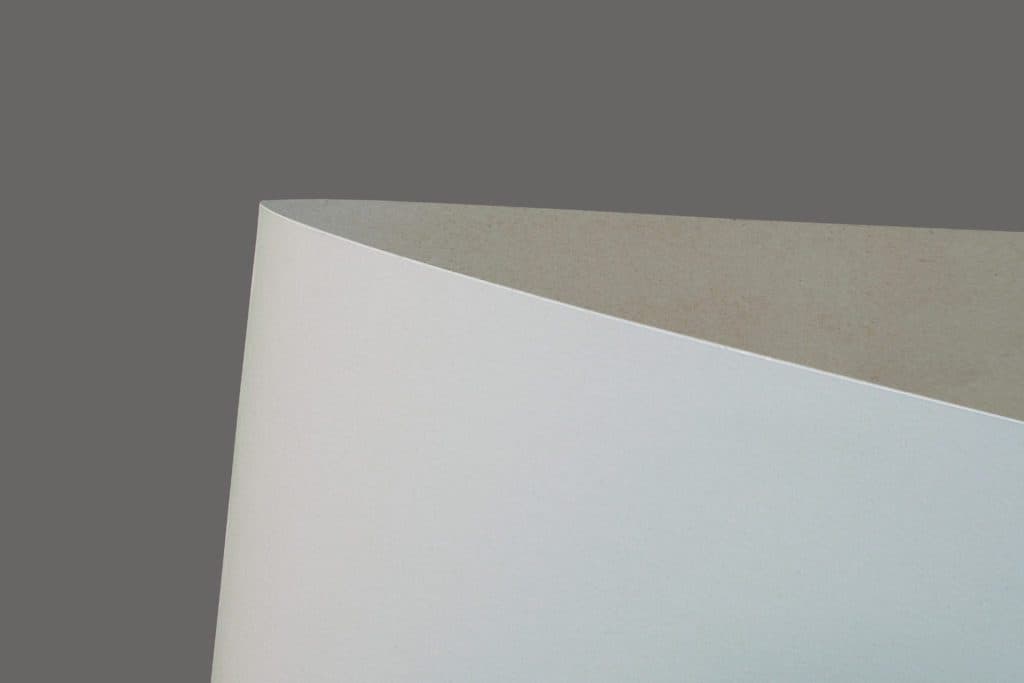
Manila board is one of the more affordable paperboards and is often used for low-cost boxes and snack boxes. It is also widely used as the laminated outer sheet for corrugated boxes. If you think of a snack box like Goraebap, it may be easier to picture what Manila board looks like. The inside is gray, and it is sometimes also called chipboard. In any case, it is not food-grade and is also a low-cost paper, so it doesn’t seem like a good match for dessert packaging.
Paper type not suitable 2: Ivory (IV)
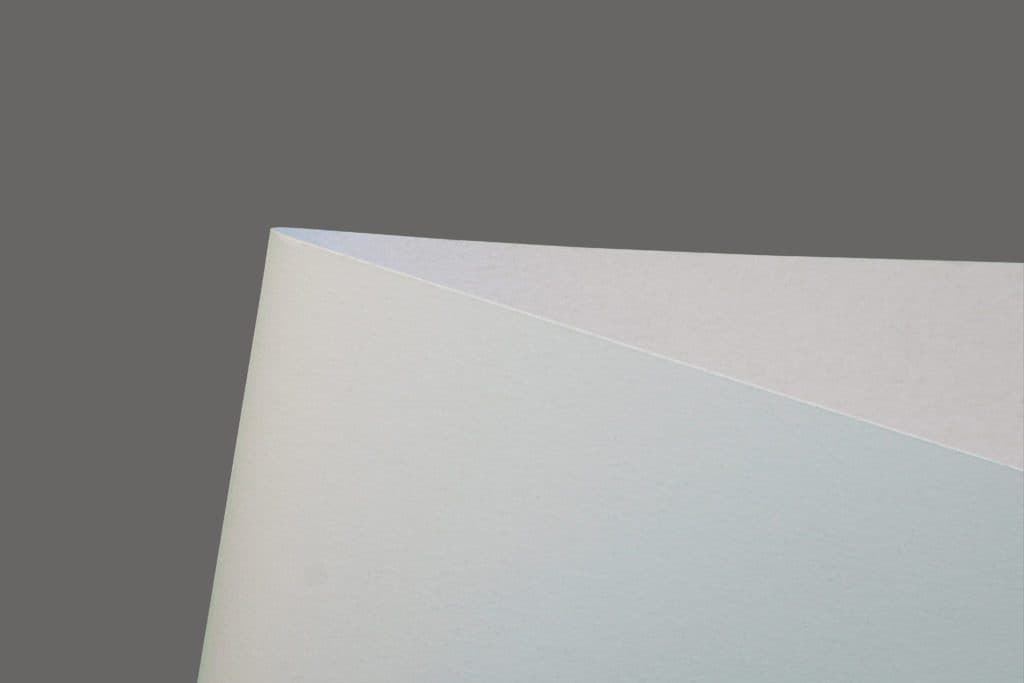
Unlike SC Manila, Ivory has a white inner side and feels a bit more premium. It is not as inexpensive as Manila board, but it is still fairly affordable, which makes it a popular choice. However, the inner layer is made with recycled pulp, so if you tear it open, the inside is gray like Manila board. And since Ivory is not food-grade, it is not suitable for dessert packaging boxes.
Suitable paper 1: Royal Ivory (AB)

The first paperboard suitable for dessert packaging is Royal Ivory. It is a premium paperboard with a white surface on the outer side, inner side, and back side. In fact, the name Royal Ivory originally referred to a paperboard from Clean Nara, but production has now been discontinued. Today, AB made by Hansol Paper is replacing Royal Ivory. It is FSC certified, premium-looking, and food-safe for direct contact with food, making it highly suitable for dessert packaging.
Suitable paper 2: Kraft
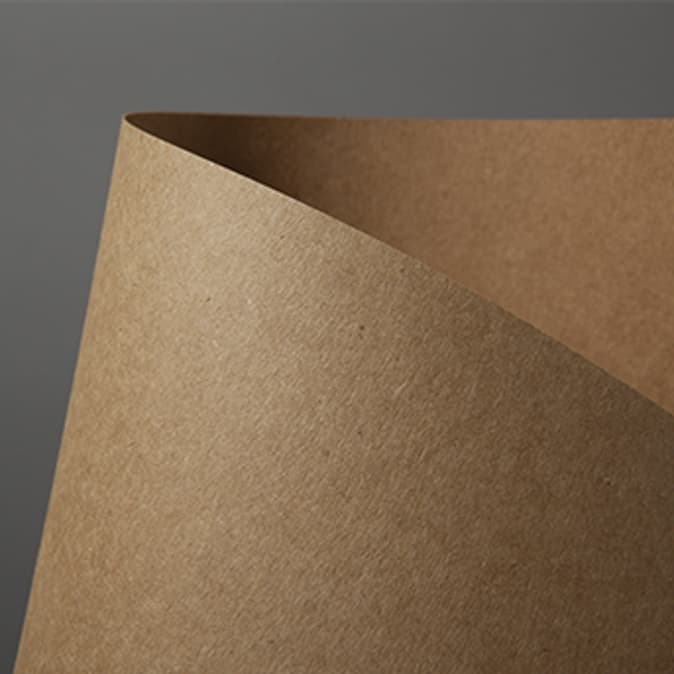
Kraft board is an eco-friendly paperboard with a natural wood-like color. It is used not only in bakeries and cafés, but also in many other places. Because it offers good durability and preservation, it is well suited for packaging. Food-grade kraft paper is tested to ensure that fluorescent substances are not detected. It is a popular choice for those who want to emphasize an eco-friendly and minimalist feel with single-color printing.
What types of dessert packaging boxes are there?
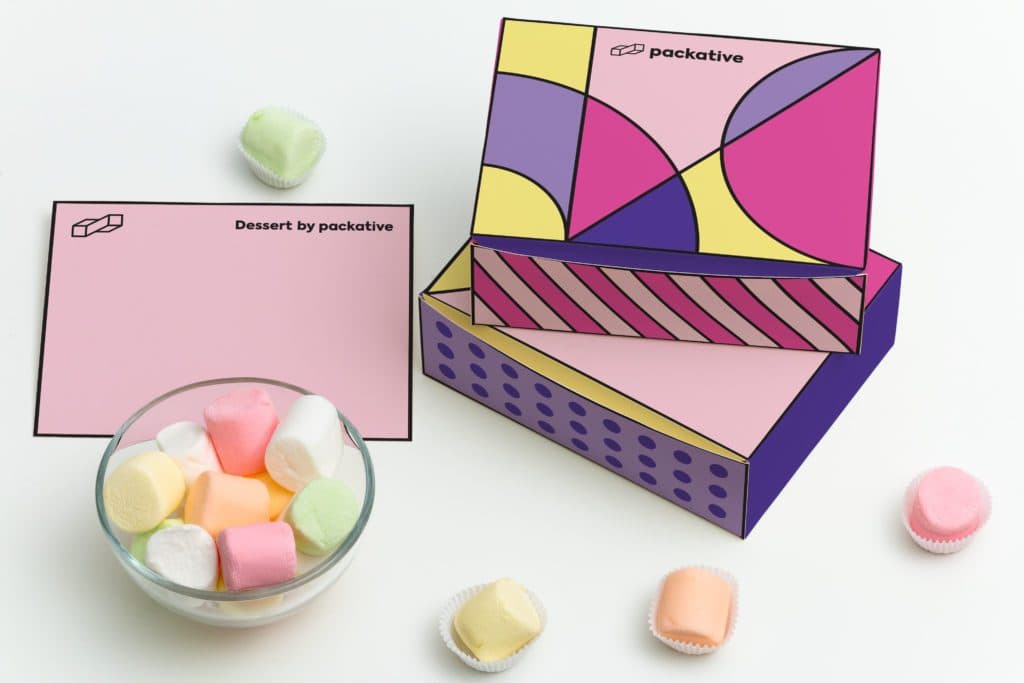
There are so many different dessert box styles that it is difficult to narrow them down to just a few types. Unless you already have a specific box design in mind, using a standard structure and applying your brand design to it can be the smartest option. In other words, you use a proven box structure for stability, adjust the dimensions to fit the product, and print the desired design on top.
At Packative, we carefully select and offer popular dessert box styles. Representative examples include donut boxes and cookie boxes. Using ready-made sizes can save on die-cut costs, making it more economical. Of course, custom sizes are also available.
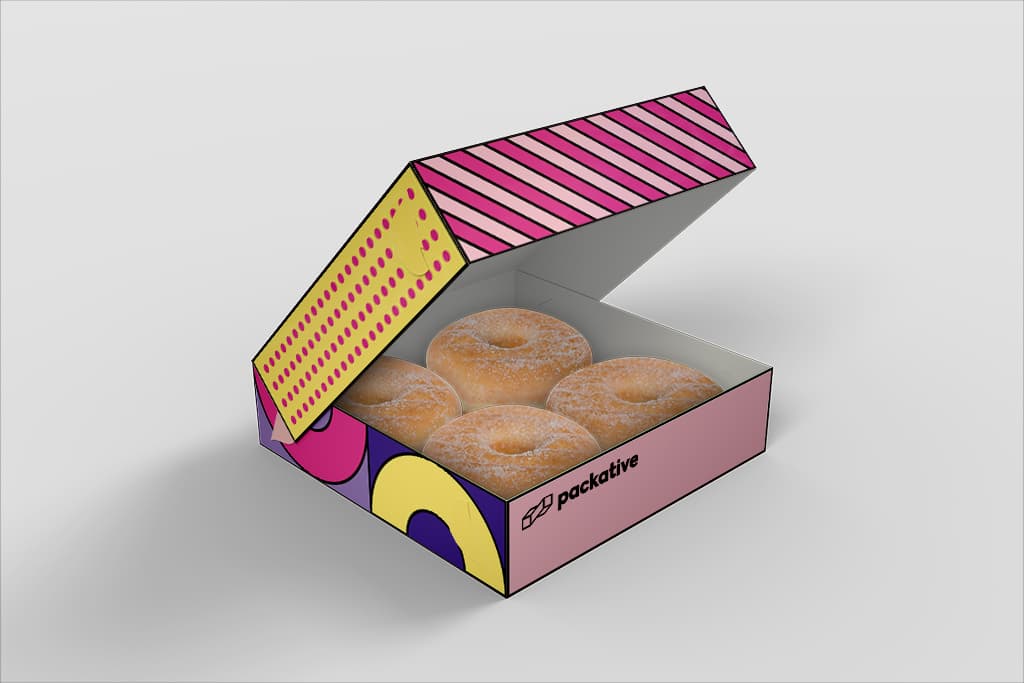 Packative donut box
If you need help making dessert packaging boxes
Was this helpful in thinking through dessert packaging boxes? If you have any questions about box design or box production, contact Packative. A packaging expert will kindly consult with you on everything from package design and structure to paper recommendations.