Learn About Box Printing
Choosing the right printing method for your design. When you handled printing jobs up to now, what 기준 did you use to choose a printer? If it was something important, did you leave it to a print shop, and if not, did you use a home or office printer? Or did you understand the differences in quality and results between printing methods? Did the printer have four CMYK cartridges, or only color and black ink?

Choosing the Right Printing Method for Your Design
When you handled printing jobs up to now, what criteria did you use to choose a printer? If it was something important, did you leave it to a print shop, and if not, did you use a home or office printer? Or did you understand the differences in quality and results between printing methods? Did the printer have four CMYK cartridges, or only color ink and black ink?
As complicated as printing on paper can be, box printing also varies depending on the packaging material and product characteristics, or on the different elements in the artwork such as product names, legal notices, and images. If you are working on package design and do not take the box printing method into account, the design may be difficult to print as intended, and you may even need to revise the design. That is how important the printing method is.
Before We Begin: Box Printing Colors
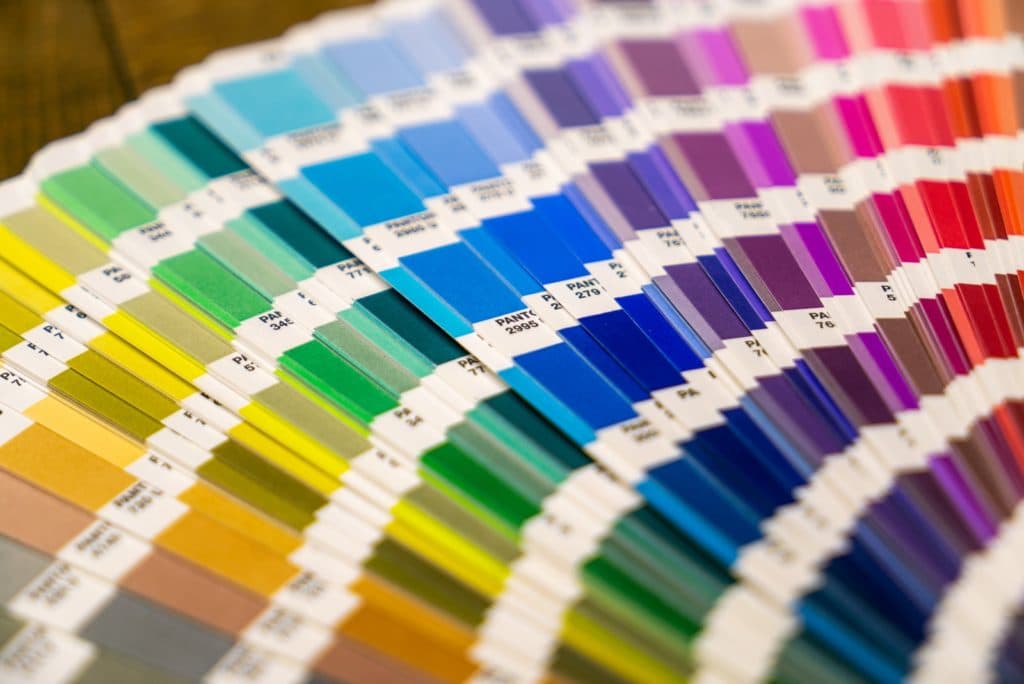
When reviewing printing methods, please also pay close attention to the number of colors used. The number of print colors refers to how many colors the final design is expressed in. Offset presses usually print in standard 4-color process, in the order Black > Cyan > Magenta > Yellow. A 4-color press can print CMYK, while a 5-color press can add extra point colors such as gold, silver, or spot colors.
If you'd like to learn more about packaging print colors: Packaging Design Color Guide
Now, Let's Look at the Types of Printing Methods:
- Offset Printing
- UV Printing
- Digital Printing
- Silk Screen Printing
- Flexo Printing
Box Printing Method: Offset Printing
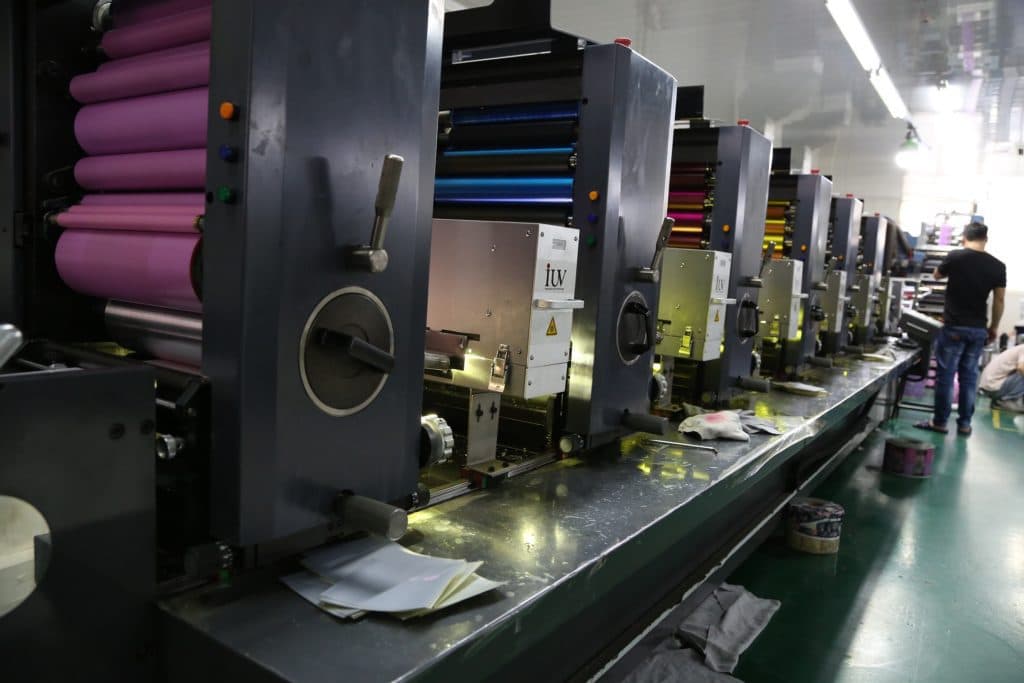
This is the most familiar printing method in everyday life. Offset printing is a method that uses printing plates and rollers to print on paper, transferring ink applied to a metal plate onto paper through rollers. In other words, rather than stamping the design directly onto paper like relief printing, the ink is first transferred to a rubber blanket plate, and then the ink on the blanket is transferred once more onto the paper.
Offset printing works through the repulsion of water and oil, and its defining feature is that the printing plate has no raised or recessed areas. First, water is applied to the surface of the plate, then ink is applied on top of it, and the image is printed onto paper through the blanket. Here, the water is slightly acidic and prevents ink from adhering to the non-printing areas of the plate. Conversely, oil-based ink is applied to the printing areas. If too little or too much water is used, paper may stick to the blanket or the printed areas may tear, so if this kind of issue occurs, you should ask the press operator to adjust the amount of water and acidity.
It supports 4-color printing and, compared with direct printing, offers better print quality, richer design expression, less damage to the plate, and the ability to use a wide range of post-processing methods. However, because the unit cost is relatively high, it is difficult to use unless you are producing in large quantities.
The Evolution of Offset Printing: UV Printing
 Source: Sergey Ryzhov/shutterstock.com
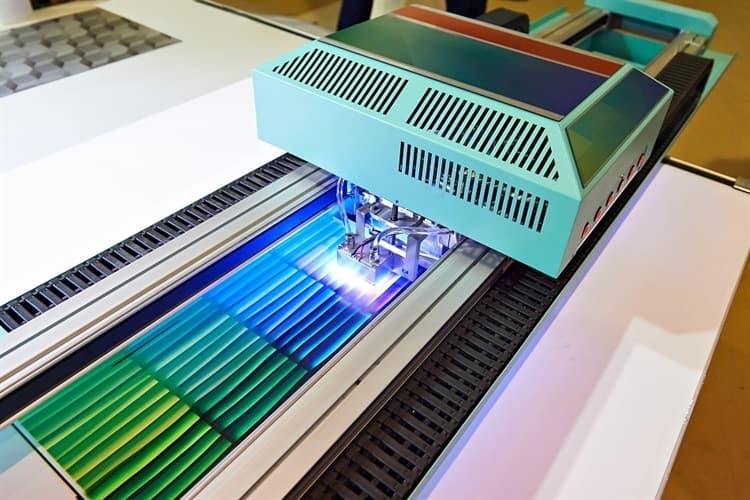
UV printing does not work by soaking ink into the output material; instead, the ink adheres to the surface and hardens there. Because the ink dries instantly through light emitted from a UV ultraviolet lamp, no additional post-processing is needed and production time is short. With its short turnaround time and ability to print on a wide range of materials, it is well suited to small-batch, multi-SKU production.
For UV printing, special UV inks must be used, and the print must pass through a UV dryer to cure properly. It is a bit more expensive than standard offset printing, but when UV offset printing is used on materials that might otherwise cause ink to rub off on the hands, it helps prevent smudging.
One of the Two Main Box Printing Methods After Offset: Digital Printing
The difference between offset printing and digital printing is that offset printing goes through the CTP (Computer to Plate) process, meaning the image is output from a computer to a plate and then printed after the plate is mounted on the press, whereas digital printing prints directly without the CTP output process.
Unlike offset printing, which requires many test sheets for plates and color adjustments, digital printing can produce even a single sheet, and if you print another one later, the result remains the same. This consistency is a major advantage, and because the cost is relatively low, it is suitable for small-volume printing. However, the color tone can differ slightly. Although the technology has improved greatly and the difference is now barely noticeable, it is still a little lower in quality than offset printing.
Also, while digital printing is cheaper for small orders, once production exceeds 350 sheets in A3 size or 700 sheets in A4 size, offset printing becomes cheaper, so digital printing is better suited to smaller orders.
Advanced Box Printing Technique: Silk Screen Printing
Have you heard of this printing method before? Yes—many people know it as the technique Andy Warhol used to create mass-produced pop art works such as Marilyn Monroe and Campbell's Soup. Silk screen printing is one of the hand-printing methods, and its name comes from the use of silk in the screen. Holes are created in the screen according to the shape of the design, and the ink that passes through those openings forms the image.
Silk screen printing has the advantages of low cost, the ability to print on curved surfaces, and support for multi-color printing. However, it is not suitable for mass production, so it is a good fit for small-batch, multi-item production.
Box Printing Method: Flexo Printing
Flexo printing uses flexible and elastic rubber or resin plates, and prints with water-based inks or solvent-based evaporative drying inks based on alcohol.
As the three elements of the plate, press, and ink have all improved technologically, the quality of flexo printing has risen dramatically and its applications have expanded widely. It has gained noticeable adoption in new fields such as flexible packaging, newspaper printing, and label printing, and has become established as an excellent printing method in terms of energy efficiency, low pollution, economy, versatility, and high speed. It is often used as a cost-effective printing method in industrial printing.
If this is your first time dealing with packaging boxes: Box Manufacturing Beginner's Guide