The Real Reasons Overpackaging Is a Problem and How Custom Packaging Can Solve It
One of the terms sellers and consumers have heard more often since COVID-19 is “overpackaging.” Everyone knows overpackaging is not a good thing, but what exactly is the real problem, and how can it be solved? Especially from a seller’s perspective, what are the smartest ways to package products? Let’s take a closer look at everything there is to know about overpackaging...

One of the terms sellers and consumers have heard more often since COVID-19 is “overpackaging.” Everyone knows overpackaging is not a good thing, but what exactly is the real problem, and how can it be solved? Especially from a seller’s perspective, what are the smartest ways to package products? Let’s take a closer look at everything there is to know about overpackaging.
Overpackaging vs. Excessive Packaging: Are They the Same?
As environmental issues have become increasingly important across society, we’ve been hearing the terms excessive packaging and overpackaging more often. Are these two words, which are generally used interchangeably, actually the same?

Source: www.ecoefficientdesign.com/ecoblog/
1. The Purpose of Overpackaging Is to Increase Volume
First, “excessive packaging” refers to packaging that uses more materials and cost than appropriate for a product (source: Doosan Encyclopedia). In other words, it means packaging that goes beyond what is necessary. This concept includes two ideas: “overpackaging” and “luxury packaging.” Luxury packaging refers to packaging that uses unnecessarily expensive materials or adds decoration beyond what is needed. Overpackaging, on the other hand, means wrapping and presenting an item with far more material than necessary in order to increase its volume (source: Korea University Korean Dictionary). To sum up, excessive packaging that spends more than necessary on a product is called luxury packaging, while excessive packaging that artificially increases volume is called overpackaging. Of course, when more packaging material is used to make a package appear larger, the cost of packaging naturally rises as well.

2. The Opposite of Excessive Packaging: Appropriate Packaging
So what is appropriate packaging, if not excessive packaging? One thing to keep in mind is that products sold commercially generally need some form of packaging. Most products pass through intermediate distribution channels before reaching consumers, and even if they do not, they still need to be stored until they are fully used. For that reason, many products cannot realistically be sold as-is. For liquid products, for example, selling them without packaging would be impossible. That said, there is a need for “appropriate packaging,” whose basic purpose is simply to hold the product and prevent deformation or damage. Appropriate packaging means “packaging a product securely at the minimum cost” (source: Our말샘), and in practical terms, it can be understood as adding only the minimum required product information or a suitable level of design.
What Is Eco-Friendly Packaging?
Source: ateriet.com
Examples of Overpackaging That Have Stirred Up Korea
A dictionary-style definition alone may not fully convey the problem of overpackaging. Let’s look at examples that have caused major issues in recent years or that we can commonly encounter in everyday life.
1. A Symbol of Overpackaging: Market Kurly?
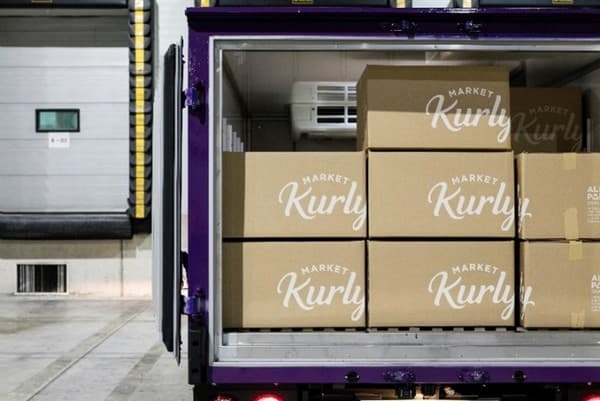
In 2020, after the outbreak of the pandemic, one of the businesses whose sales rose rapidly was online grocery services that delivered daily necessities quickly to people’s homes. Among them, Market Kurly came under fire from consumers for overpackaging. Even when one person ordered multiple types of products, each item was shipped in a separate box, and the boxes were larger than necessary. In addition, the excessive amount of plastic and Styrofoam used in packaging made many consumers uncomfortable. Similar criticism was also directed at other companies such as Coupang and SSG, but unlike other businesses that introduced reusable insulated boxes, Market Kurly drew controversy by stating that it would continue using disposable boxes. As criticism continued, Market Kurly began introducing reusable packaging called the “Kurly Purple Box.”
Source: Market Kurly (secondary source: Monday Newspaper www.wolyo.co.kr/news/articleView.html?idxno=116329)
2. Is Overpackaging Inevitable for Holiday Gift Sets?
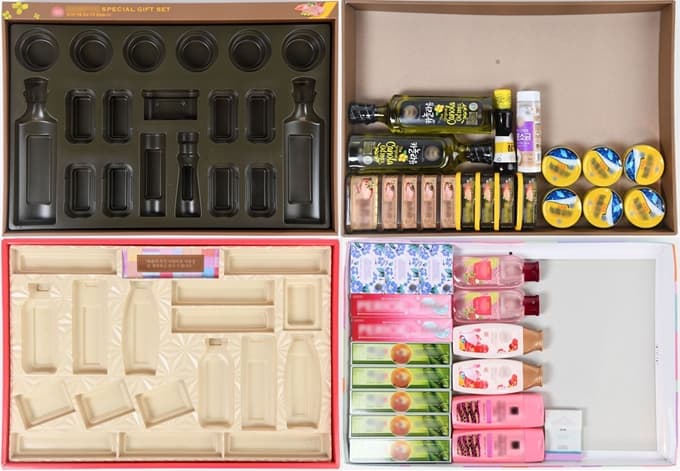
One of the most common images that comes to mind when people think of overpackaging is holiday gift sets. These gift sets, commonly sold at supermarkets around Lunar New Year or Chuseok, are usually packaged by matching several daily necessities together in one box. Most of them use a fixing material. A fixing material is one of the materials used in packaging, and it refers to packaging materials intended to keep products from moving. Holiday gift sets are generally arranged so that each individual product can be seen at a glance from the front. But many consumers argue that this is unnecessary overpackaging. In fact, it is easy to see that removing the fixing materials alone can save nearly half the volume. Another major point of criticism is that these fixing materials are mostly made of plastic.
Source: Hankook Ilbo (hankookilbo.com/News/Read/201901301491381138)
3. Is Overpackaging of Fruit and Vegetables for Freshness Preservation?
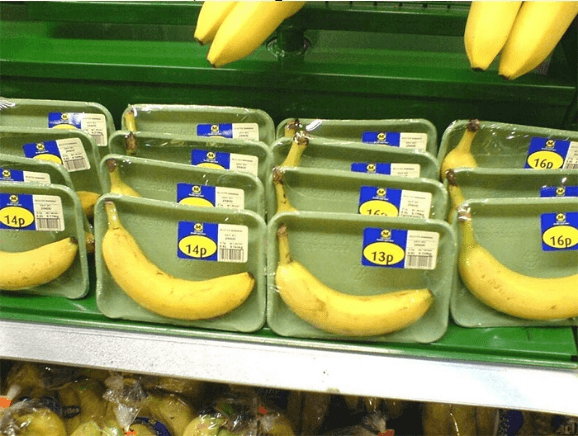
It’s also easy to think of examples of overpackaging in fresh produce such as fruit and vegetables. This issue became more prominent as convenience stores began selling more of these items. Unlike traditional supermarket sales, convenience stores often sell pre-portioned fruit targeted at single-person households. However, selling fruit individually naturally increases waste because each item needs its own packaging. What’s worse is that, in order to make products look more appealing, unnecessary Styrofoam and plastic packaging are often overused. This trend has even flowed back into supermarkets, where sales of pre-portioned and overpackaged fresh foods have increased as well.
Source: naver.me/F5b3wIsz
4. Korea’s Signature: “Nitrogen Snacks”?
Have you heard the term “nitrogen snacks”? When buying packaged snacks, it is common for the actual snacks to fill less than half the bag, with the remaining space filled with nitrogen. This is another classic example of overpackaging, since more packaging material is used than is needed to hold the product. The issue is even more serious with boxed snacks. They often include individual plastic wrapping, unnecessary fixing materials, and then a large outer box on top of that. Some packaging is certainly needed to keep snacks intact, but consumers cannot help feeling betrayed when similar imported snacks are packed with much larger quantities in the same volume.
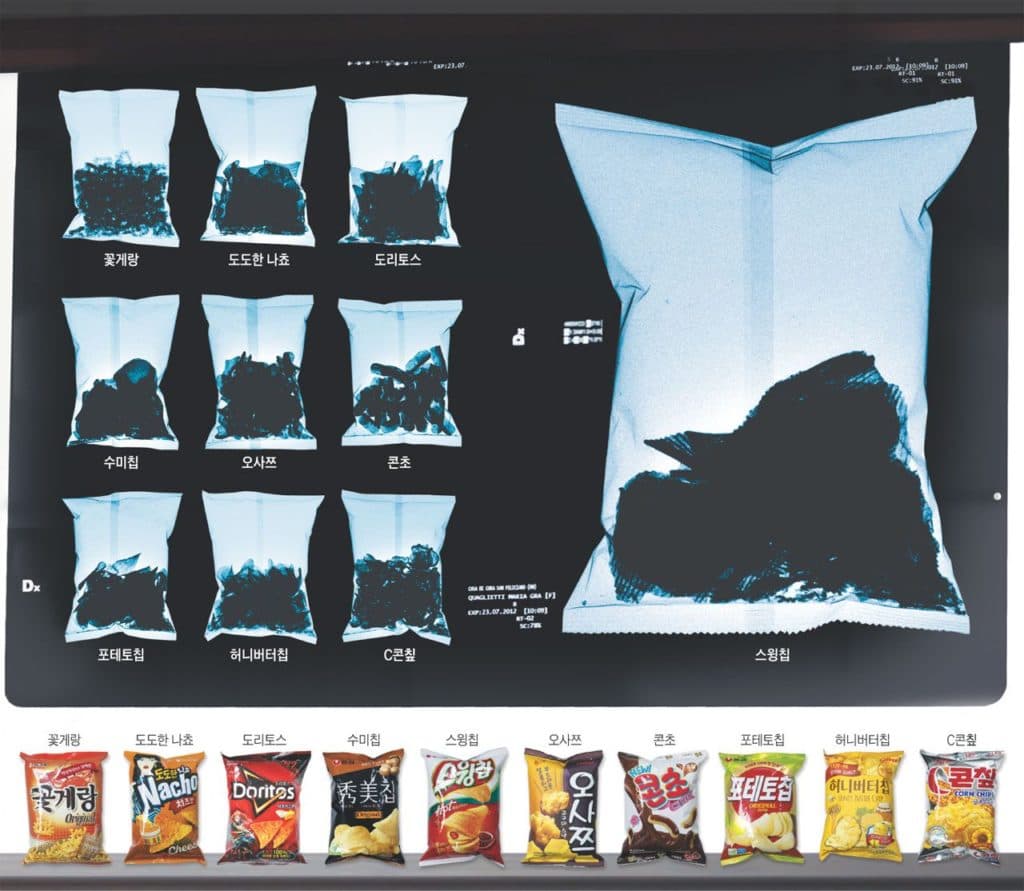
Source: Chosun Ilbo (biz.chosun.com/site/data/html_dir/2016/12/23/2016122301919.html)
What’s the Problem with Overpackaging?
So what harmful effects does overpackaging, which has drawn so much public criticism, actually have? Let’s look at why overpackaging should be avoided.
1. Increased Spending from Unnecessary Material Use
From a seller’s perspective, using more materials means higher costs. In fact, many sellers do not put much effort into developing packaging techniques, which often leads to unnecessary overpackaging. But with just a little thought, efficient product packaging can be achieved with less material. Higher costs for the seller also mean higher product prices, so overpackaging ultimately becomes waste that benefits no one.
2. A Direct Hit to the Environment Through Massive Waste Generation
The biggest reason overpackaging has recently become such a major target of criticism is environmental pollution. Since most packaging only serves to protect products temporarily, it is ultimately discarded after fulfilling its role. Even if packaging is made from recyclable eco-friendly materials, experts say reusable packaging is much more environmentally friendly than recycling alone. This is because recycling materials still requires energy, so containers that can be used multiple times before disposal are the better option. Yet the biggest enemy of humanity remains plastic waste. Plastic is still one of the most common packaging materials, and it is widely known that it can take thousands of years to fully decompose.
What kinds of eco-friendly materials are there?
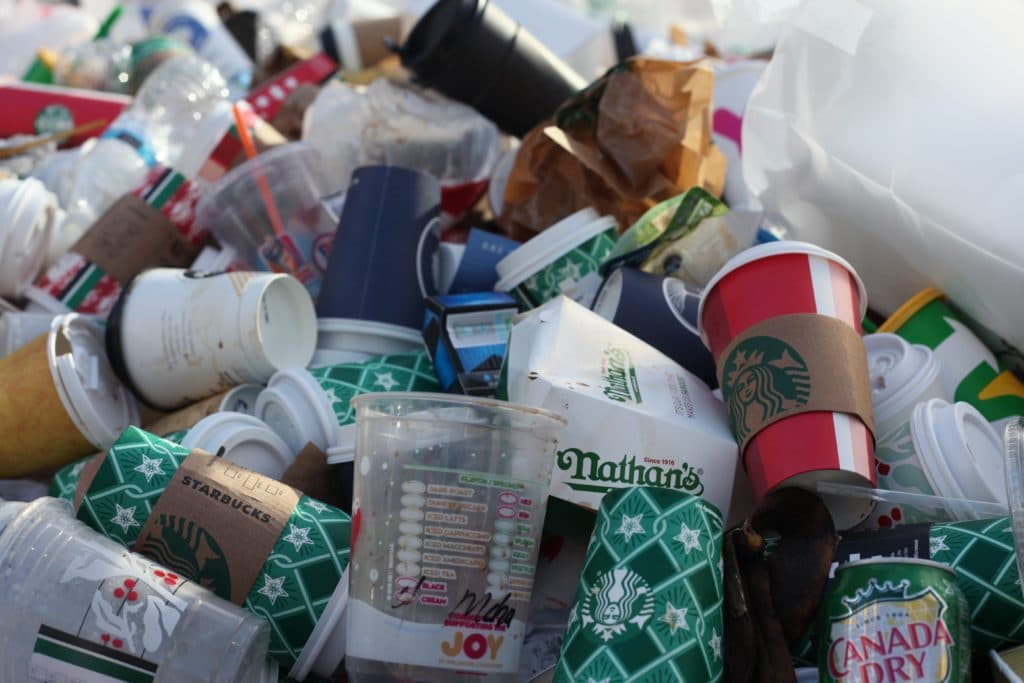
3. Unnecessary Increase in Volume During Transport
Many products go through distribution and transportation. When overpackaging is added, the volume and weight of each item inevitably increase. For consumers carrying home just one product, the difference may not seem significant. But from the perspective of a transport company moving many items at once, this leads directly to unnecessary fuel consumption and exhaust emissions, which in turn causes more environmental pollution. If transport becomes more cumbersome, costs rise as well, which can again lead to higher product prices.
Learn About Domestic and International Regulations on Overpackaging
As the practical problems caused by overpackaging have become more prominent, related laws have been revised and implemented both in Korea and abroad. Let’s see how overpackaging can become a legal issue.
1. What Laws Are Currently in Force in Korea?
In Korea, the Act on the Promotion of Saving and Recycling of Resources, commonly known as the Resource Recycling Act, is in force. Article 9 of the Act includes provisions on reducing packaging waste, and according to Article 4 of the Enforcement Rules, the “Standards for Packaging Materials and Packaging Methods for Products,” manufacturers and others must reduce the amount of packaging material used and the number of packaging layers when packaging products in order to suppress unnecessary packaging. The Ministry of Environment has established “standards for packaging methods by product type,” which precisely regulate the allowed packaging space ratio and number of packaging layers for each product category. For example, in the processed food category, packaging space must be 15% or less of the total volume, and the number of packaging layers must be no more than two. For beverages, including alcoholic drinks, packaging space must be 10% or less and packaging layers no more than two. For small electronic products, the standard is 35% or less, again with no more than two layers. Sellers who violate these standards are subject to fines of up to KRW 3 million.
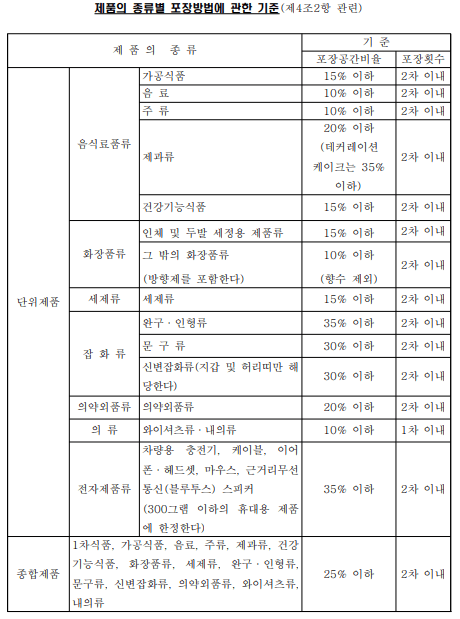
Source: Korea Legislation Research Institute, National Law Information Center
2. The EPR System and the Global Landscape
Source: littlestickerdoodles.com
A system that makes manufacturers responsible not only for their products but also for recycling the waste generated after use is called the Extended Producer Responsibility (EPR) system. It has been in place in Korea since 2003, but in many OECD countries such as Germany, France, and Japan, it had already become standard long before then. Year by year, more countries are banning overpackaging through stricter and more efficient laws.
How Can We Solve the Overpackaging Problem?
So how can we solve the problem of overpackaging? First, let’s look at what consumers can do.
1. Keep Reusable Items on Hand
One of the best methods is to reduce the use of disposable items by using reusable baskets or bags. Especially nowadays, environmental fees are strictly applied to single-use plastic bags and similar items, so bringing a reusable shopping bag when going to a convenience store or grocery shopping can also help reduce unnecessary spending. Also, as many cafes have reduced the use of plastic cups, bringing a tumbler when buying drinks has even become a trend.

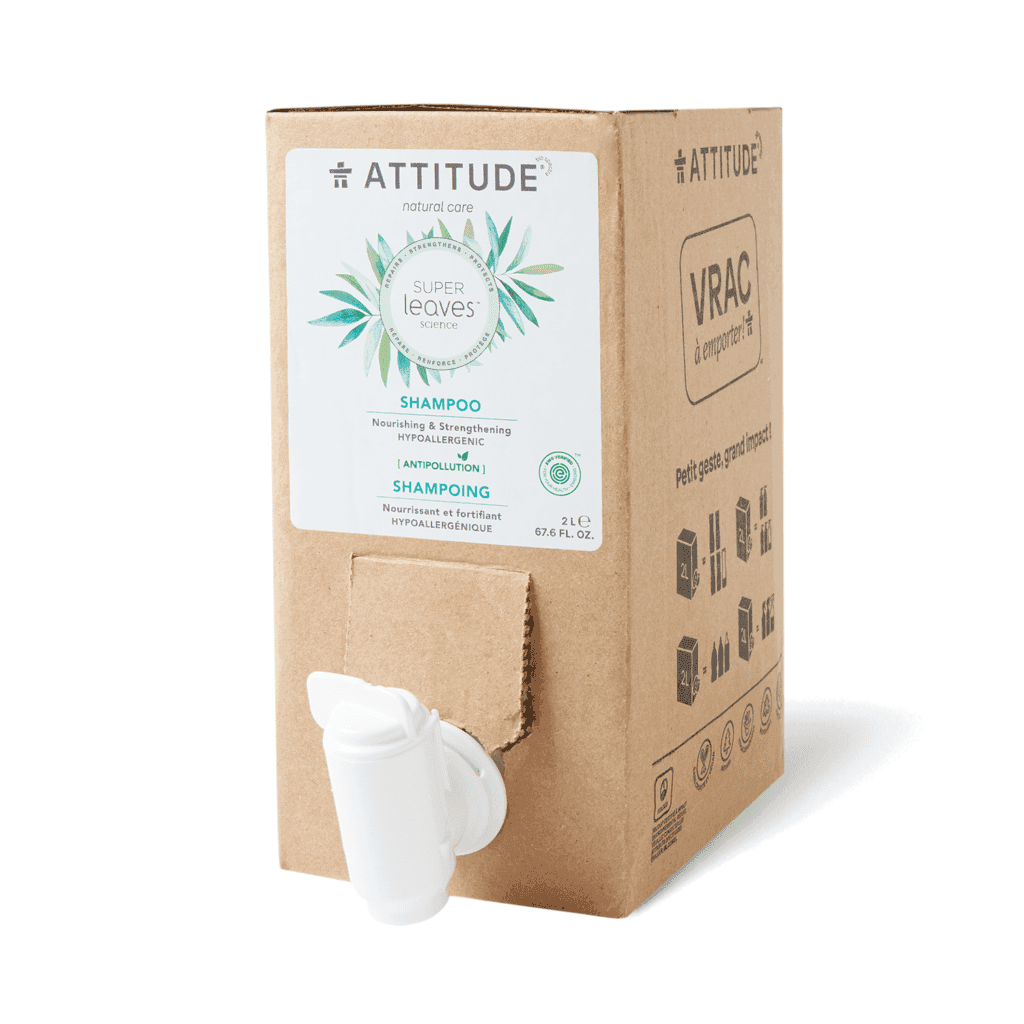
2. Buy in Bulk
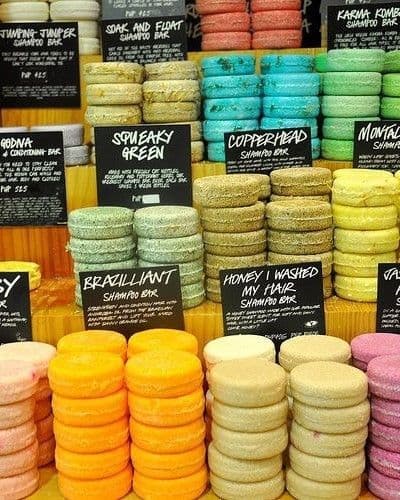
The smaller the unit in which a product is purchased, the more packaging material is inevitably used. Therefore, whenever possible, buying bulk-size products and consuming them gradually is a good way to reduce packaging waste.
Source: sallybeauty.com
3. Buy Products with Less Packaging
Buying overpackaged products ultimately means you will be the one throwing away the packaging materials used for them. Choose products packaged with materials that are as biodegradable or easily recyclable as possible, and help reduce the sales of overpackaged goods.
Source: thegreenhubonline.com
4. Kill Two Birds with One Stone Through Upcycling
There are more ways to reuse packaging materials yourself than you might think. “Upcycling” is by no means something only professional companies can do. Since packaging is not only for protecting products but also a design element, well-designed packages can be easily repurposed after a simple cleaning. By reusing packaging, you can reduce the need to buy other items for that purpose and also cut down on waste.
Say No to Overpackaging: A Good Example of an Eco-Friendly Corporate Package, noissue
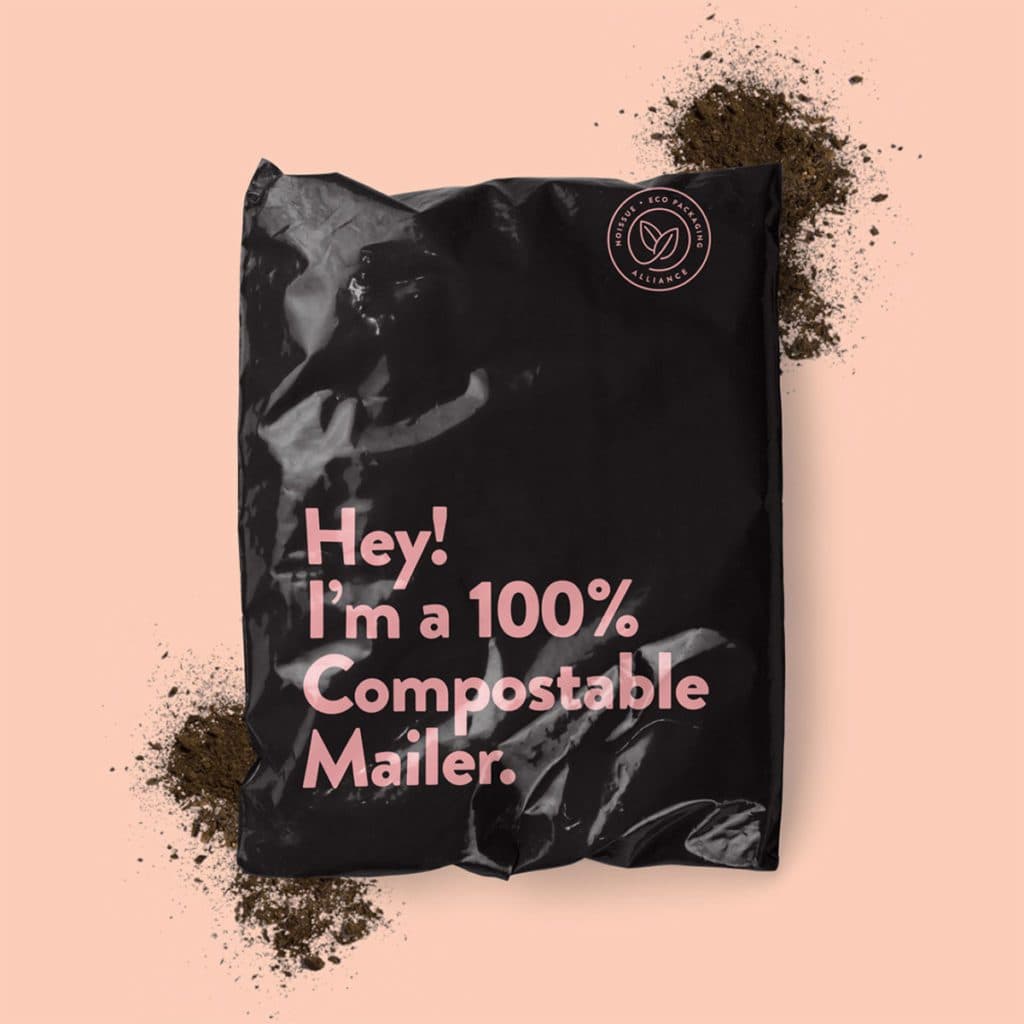
noissue, a company that produces sustainable products and packaging, uses 100% compostable corn-based bags. Because this packaging can be composted directly in your backyard, it is fully recyclable in practice. Compared with regular plastic bags, which can take up to 400 years to decompose, these bags break down in just six months. Even so, they are excellent for printing, sealing, and waterproofing, while also offering strong durability and elasticity. Beautiful design is an added bonus.
Want to make eco-friendly boxes yourself?
Source: forageandsustain.com
A Good Way to Avoid Overpackaging
As one of today’s hottest issues, overpackaging is a major cause of environmental pollution. But it is also a problem that consumers and sellers can work together to solve. If you are a seller 고민중 on packaging, we recommend custom packaging made to order as a good way to avoid purchasing unnecessarily large packages and to reduce inventory as well. A single package made only for that product, and fitted exactly to it, is the best way to avoid overpackaging while still highlighting the product’s identity. Try 100% custom box production with Packative.
Request a quote for easy and fast custom box production