Why Is a Pizza Box Square When Pizza Is Round? The Reason We Use Square Boxes
Pizza is round, so why are pizza boxes square? Have you ever wondered about that? In packaging, it’s basic knowledge that if a box doesn’t match the product’s size and leaves empty space inside, it won’t protect the product well. In fact, when you actually order delivery pizza, you’ll even see special securing pins used to keep the pizza from moving around inside the box during delivery...
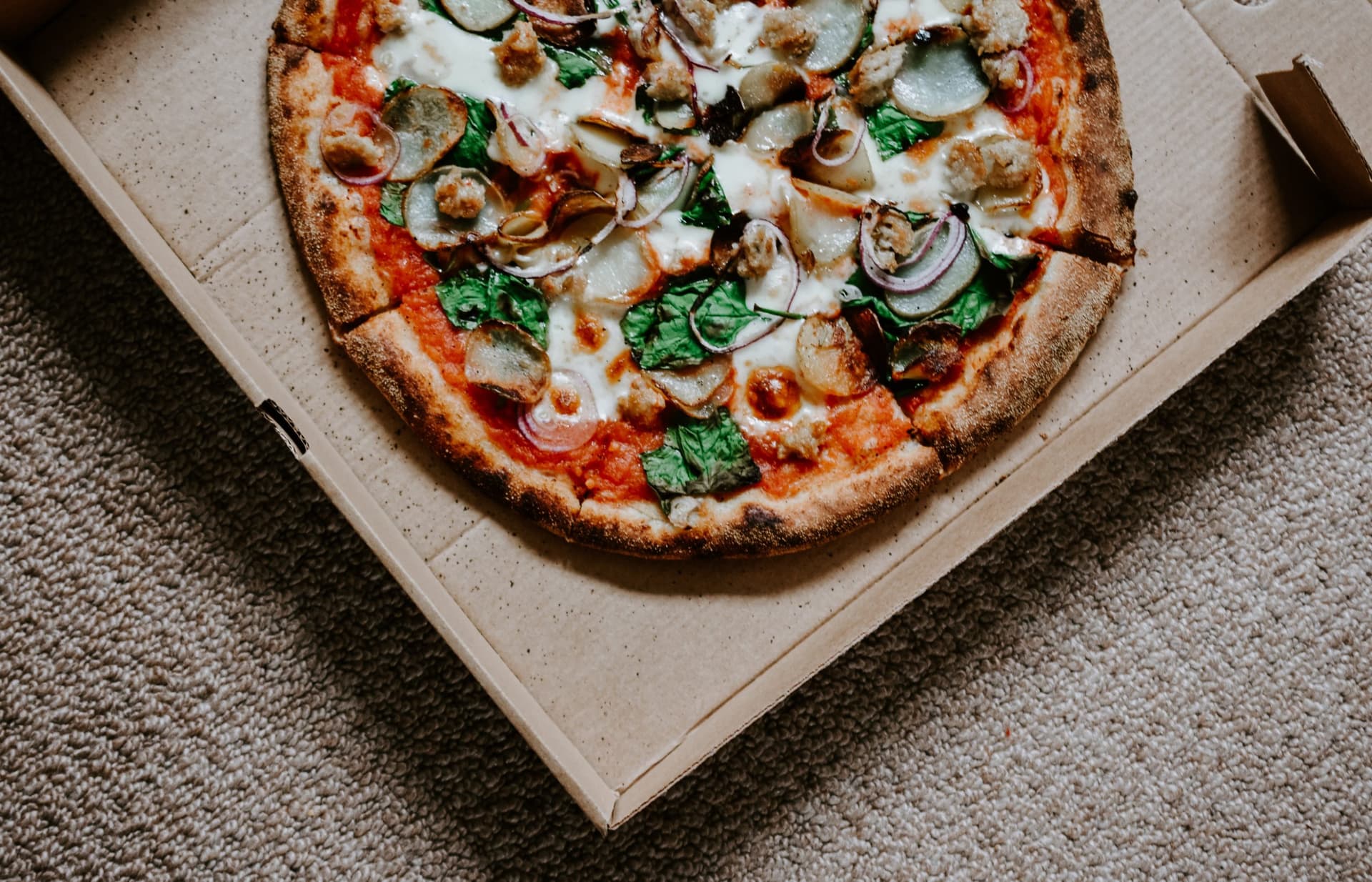
Pizza is round, so why is the pizza box that holds it square? Have you ever wondered about that? In packaging, it’s basic knowledge that if a box doesn’t match the product’s size and leaves empty space inside, it won’t protect the product well. In fact, when you actually order delivery pizza, you’ll even see special securing pins used to keep the pizza from moving around inside the box during delivery. Today, let’s take a look at everything there is to know about pizza boxes and why square boxes are used, even with securing pins.
The History of the Pizza Box
 Source: seriouseats.com
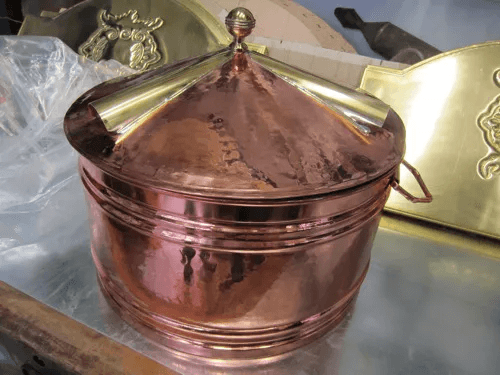
First, let’s briefly look at the origins and history of the pizza box. Pizza was first invented in Naples, Italy, sometime between the 1700s and 1800s, and until the early 1800s it was transported in copper containers. These pot-like containers were called “Stufa” (meaning “stove” in Italian). Because copper is a metal with high thermal conductivity, it could keep pizza warm. The Stufa also had vents in the lid to release steam, so pizza could be delivered home in a truly hot and delicious condition.
Over time, pizza began gaining popularity in the United States as well. In places like New York at the time, pizza was sold as takeout by rolling it into a cone shape, wrapping it in paper, and tying it with string. The surge in demand for pizza came with World War II. During the war, millions of U.S. soldiers encountered pizza in Italy while deployed there. When they returned home after the war, the “delivery pizza” industry began in earnest.
The Arrival of the Pizza Box at Last
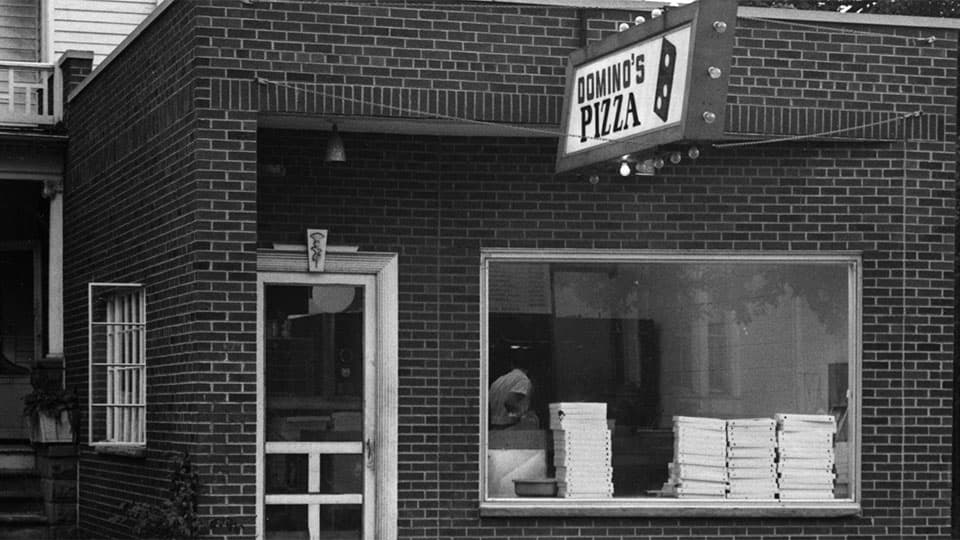 Source: dominos.com
After the war, when pizza began to be mass-produced and sold, boxes were used for transporting pizza for the first time. The United States in the 1950s was enjoying a postwar economic boom. Pizza orders started coming in waves. Naturally, pizzas had to be “stacked” like towers. Thin paper boxes used for ordinary bakery packaging were not enough. Even stacking them just a few layers high caused them to wrinkle or collapse easily under the hot steam and moisture from the pizza. That is how the corrugated pizza box, in the form we know today, came into being.
The person who made the greatest contribution to the development of the pizza box we’re familiar with is Tom Monaghan, the founder of Domino’s Pizza. At the time, Domino’s was especially focused on delivery, so it put a great deal of effort into finding an efficient delivery method. Domino’s then went through several box manufacturers and eventually succeeded in developing a box that was sturdy enough.
The Shape and Material of Pizza Boxes
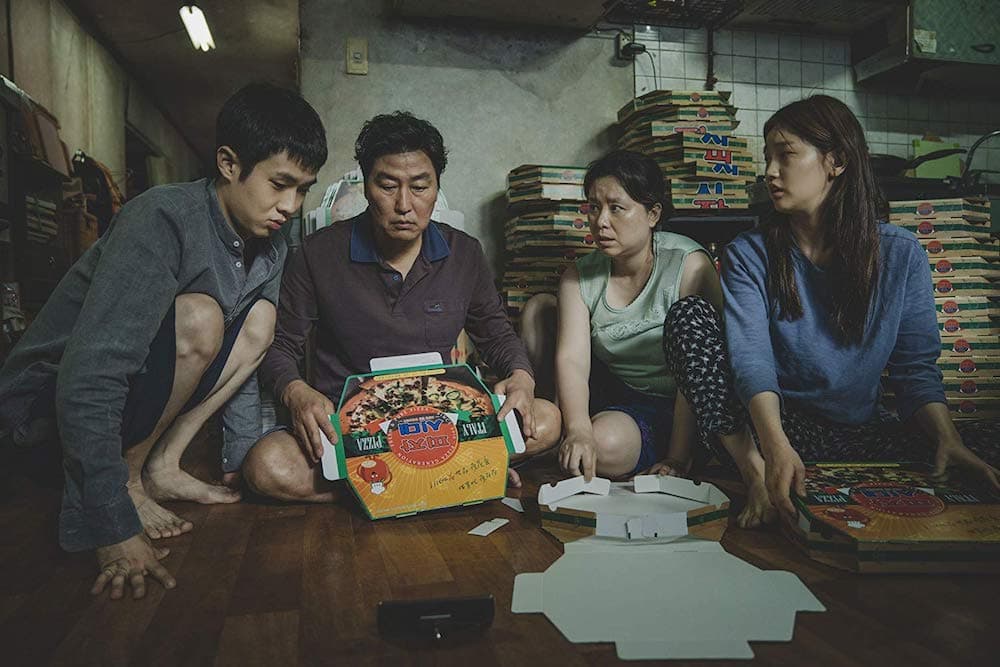 Source: pmq.com
In the film Parasite, which took the world by storm in 2020, there is a scene where the main family folds pizza boxes together. In that scene, they even watch a YouTube video about “how to fold pizza boxes quickly.” Pizza boxes have a more complex dieline than ordinary boxes. They need to be slightly larger than the pizza size, and because they must not be damaged by oil, moisture, or heat, they need to be water-resistant. They also have to support the weight of the pizza and protect the contents from external impacts during delivery, so they are made from sturdy corrugated board. However, since they must be folded along lines to form the box, the corrugated board cannot be so thick or rigid that it becomes impossible to fold.
For reference, “corrugated board” refers to board with a wavy, fluted layer in the middle, sandwiched between flat linerboards on the top and bottom. Thanks to this structure, corrugated board is resilient, lightweight, and not easily damaged by impact, moisture, or sudden temperature changes. That is why corrugated boxes are commonly used whenever contents need to be protected safely—such as with parcel boxes. And of course, pizzas too!
Learn more about corrugated boxes here
A Round Pizza, But Not a Round Box
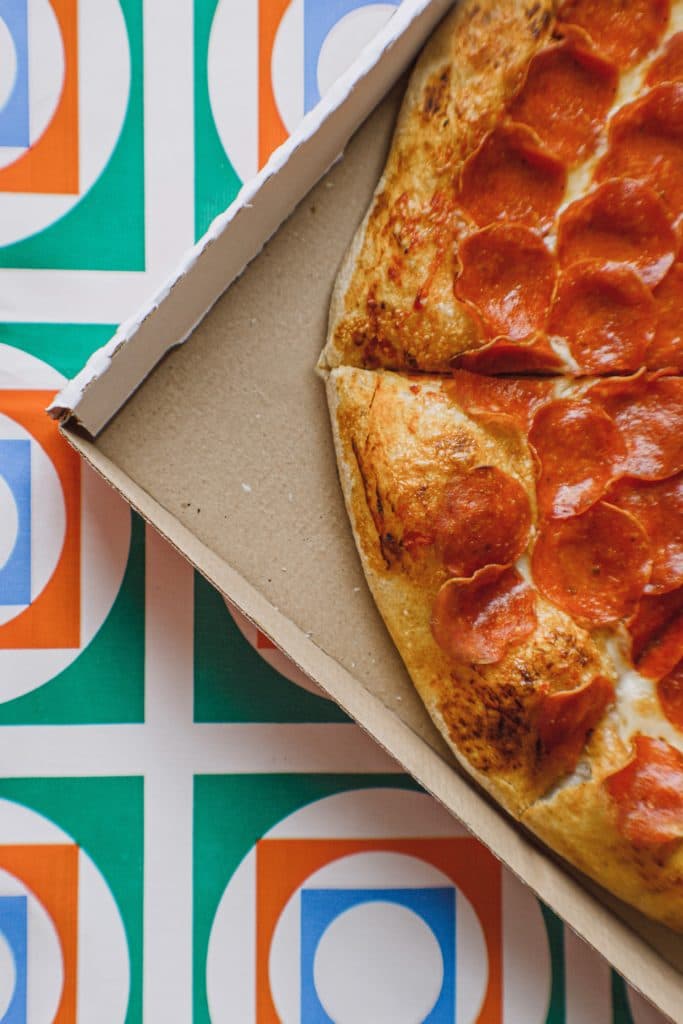
So in the end, unlike the round pizza, the reason pizza boxes are square is that pizzas need to be stacked stably. In particular, the key to pizza delivery is making sure the pizza arrives at the customer’s door hot and delicious, just as it was when it came out of the oven. That means the box has to be sturdy in shape and material so it won’t wrinkle or tear from grease, heat, or moisture.
What do you think? Isn’t it interesting that the pizza box we’ve always taken for granted actually has a more complex reason and structure than you might have expected? If you try making one yourself, you’ll probably find it surprisingly tricky. If you want to create a stylish, well-designed box that is also safe and sturdy enough for pizza packaging, try Packative. You can freely choose the options you want and quickly and easily complete your custom pizza box.